Mathematics
Queen Edith Primary School: Mathematics Subject Statement
Intent
At the Queens’ Federation we aim to foster ‘Learning for Life.’
We will provide a rich, relevant and inspirational curriculum that promotes a lifelong love of learning and equips our pupils with the key knowledge and understanding, skills and personal qualities that they will need to thrive in a rapidly changing world. Our curriculum is designed to be relevant to our children and is linked to the context of our school and the local community.
At Queen Edith Primary School, we want all pupils to achieve confidence, competence and enjoyment in mathematics. The fundamental idea is that all pupils develop a deep understanding of the mathematics. This is central to the planning and provision of mathematics. Learning is carefully sequenced, taking into account what has been taught before, and what knowledge and skills are needed for the next stage of each child’s mathematical development.
Three key aims at the heart of our mathematics curriculum are for pupils to:
- be fluent in the fundamentals of mathematics
- reason mathematically
- solve routine and non-routine problems with increasing independence.
Implementation
Key features of our approach:
- Children progress through the curriculum content at the same pace.
- Teachers reinforce an expectation that all children are capable of achieving high standards in mathematics.
- Children are taught through daily whole-class teaching, where the focus is on all pupils working together on the same lesson content at the same time.
- Daily fluency sessions support the retention and recall of key number facts.
- Teaching is underpinned by a small-steps mastery approach and supported by carefully crafted lessons, resources and representations to foster deep conceptual and procedural knowledge.
- Differentiation is achieved through the provision of step forward and step back activities within the majority of lessons.
We are a Teaching for Mastery school and this approach is implemented and supported through the use of the NCETM Spines, White Rose Mathematics scheme and the NCETM Mastering Number Programme in Reception and KS1. Teachers will also carefully select other resources to support their teaching to ensure an enriching curriculum which is in line with the Teaching for Mastery ethos. For example, NRich or I See Reasoning tasks. Through the use of these resources we ensure that:
- Teachers introduce new concepts in a coherent sequence using a mastery approach.
- Concepts are taught through high quality mathematical models and representations.
- Mathematical models are consistently used through school.
- Teachers are supported with their subject knowledge.
Impact
At Queen Edith Primary School, pupils leave us as knowledgeable, skillful and confident mathematicians ready for the next phase of their learning. They are able to quickly recall facts and procedures and have the flexibility and fluidity to move between different contexts and representations of mathematics. Our pupils have the ability to recognise relationships and make connections in mathematics and can demonstrate a skill in multiple ways, using mathematical language to explain their ideas. Pupils recognise the importance of mathematics in the wider world and are able to use their mathematical skills and knowledge confidently in a range of different contexts.
Yearly Overview
Our mathematics teaching in Key Stages 1 and 2 is based upon the National Curriculum – Mathematics – Programmes of Study document. This covers the full range of mathematics taught at primary school: number and place value, addition, subtraction, multiplication and division, fractions (including decimals and percentages), ratio and proportion, algebra, measurement, geometry (shape, position and direction) and statistics (tables, charts and graphs). We currently use the White Rose Maths Scheme resources to support our Maths teaching. The termly progression within each year group at Queen Edith is set out in the following documents:
National Curriculum Mapping Document
Calculation Policy - Addition & Subtraction
Calculation Policy - Multiplication & Division
In Reception, mathematics is linked to the NCETM Mastering Numbers Scheme providing children with opportunities to develop and improve their mathematical skills. The prime areas of Communication and Language, Physical Development and Personal, Social and Emotional Development, and strengthened and applied in the specific area of mathematics. Children are supported to enable them to count reliably, place numbers in order and say which number is one more or less than a given number; children count on and back to add and subtract small numbers and solve problems involving doubling, halving and sharing. Children also talk about size, weight and other measures using everyday language; they recognise, create and describe patterns, and explore objects and shapes using mathematical language.
Mathematical Challenges
Children at Queen Edith have many opportunities to challenge themselves mathematically, whether working with a Stimulus student from Cambridge University, competing against children from other schools, or just trying to beat the high scores in maths games. Each year, many of the Later Years children sit the Mathematical Association Primary Maths Challenge Paper, with some progressing to the Bonus Round. Recently, a team of children won the regional heat of the Cambridgeshire Year 5 Mathematics Challenge and went on to compete in the final held at the Duxford Imperial War Museum. Queen Edith also hosts one of the Maths Net masterclasses for children from schools around Cambridge.
Information and Resources for Parents
The Queens’ Federation Maths Calculation Policy describes the progression in the methods of calculation taught within the Federation, particularly relating to addition, subtraction, multiplication, division, fractions, decimals and percentages.
On the National Numeracy website you can find a wealth of ideas for ways in which you can support your child’s maths at home.
Examples Of Learning
Academic Year 2024-2025 Summer Term
Year 2
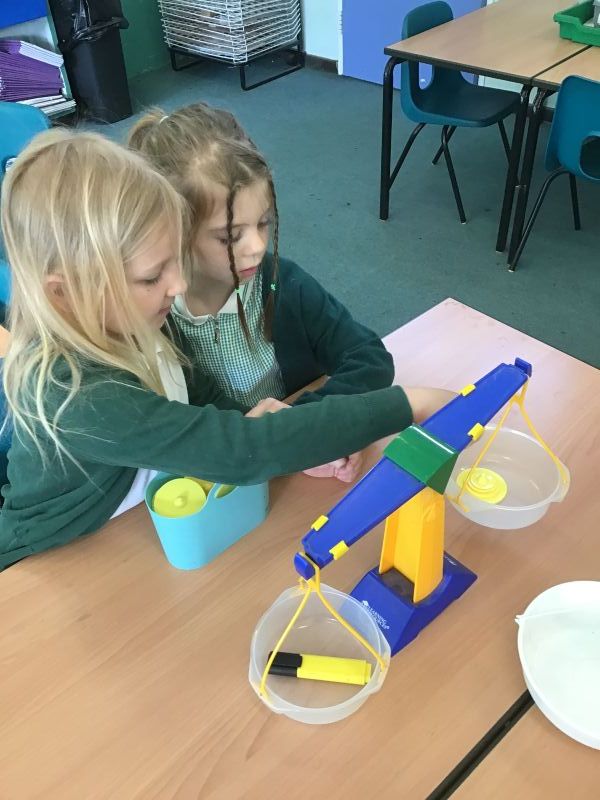
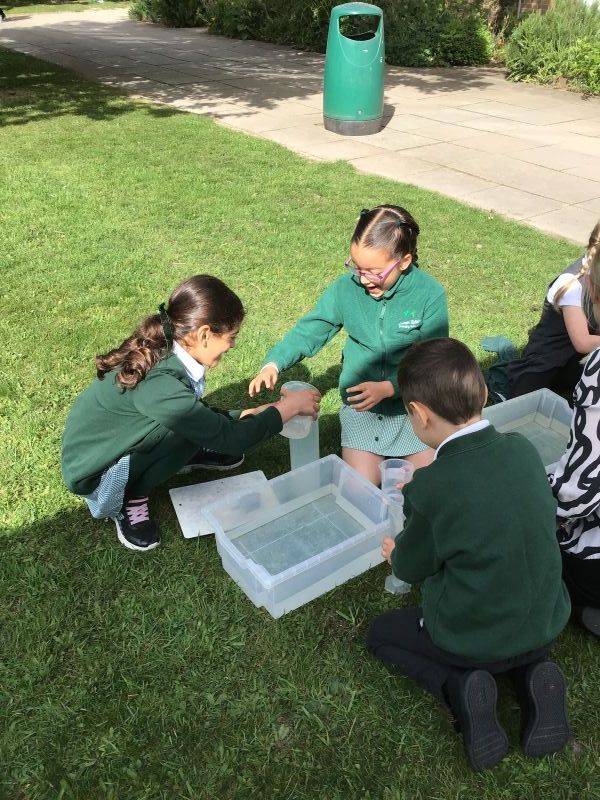
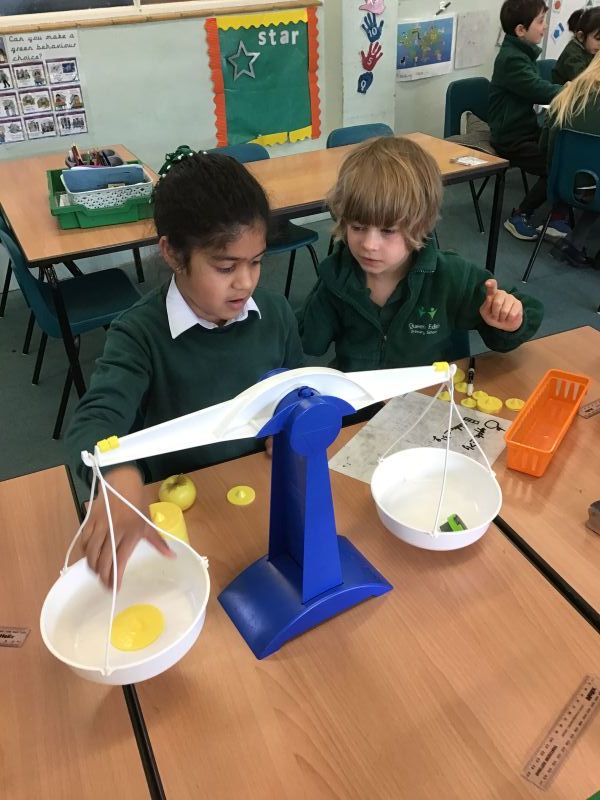
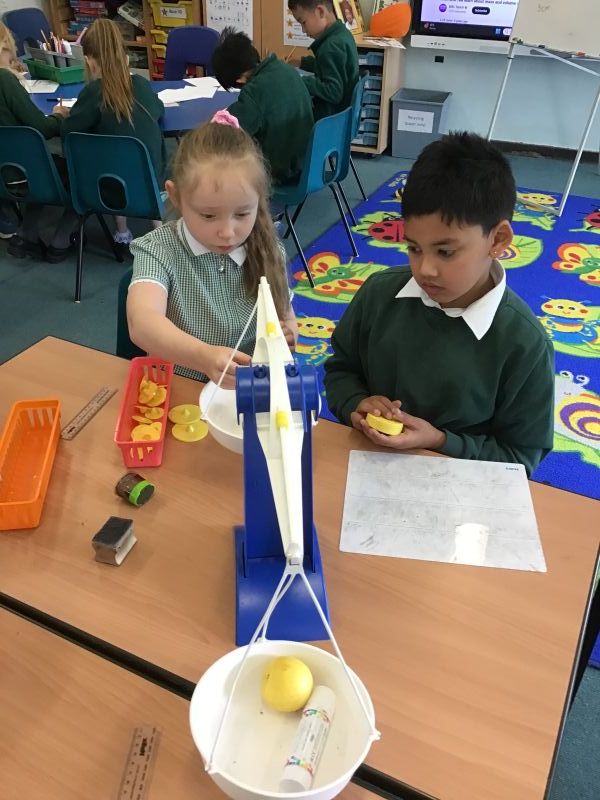
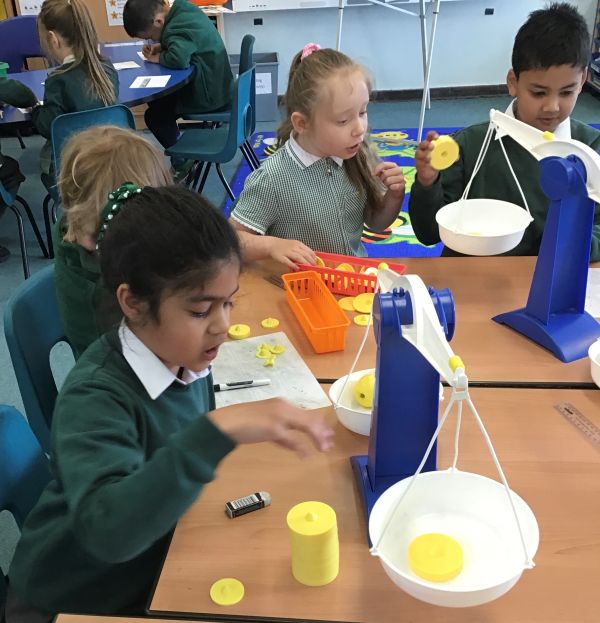
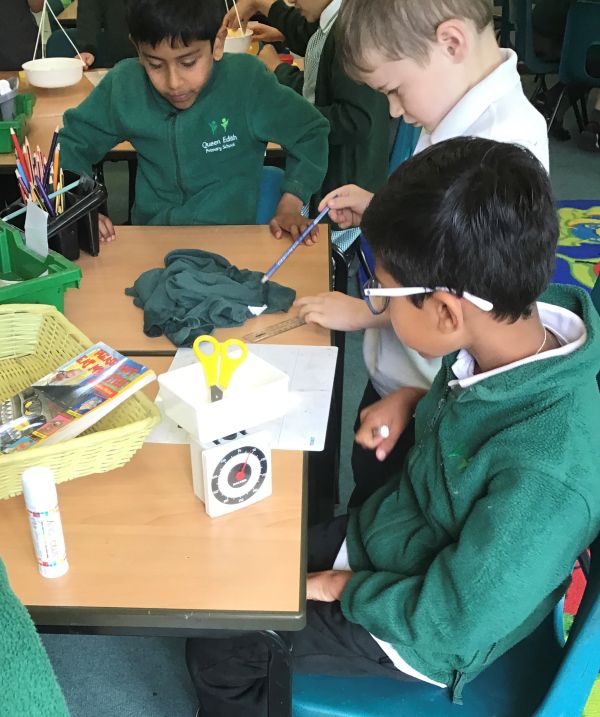
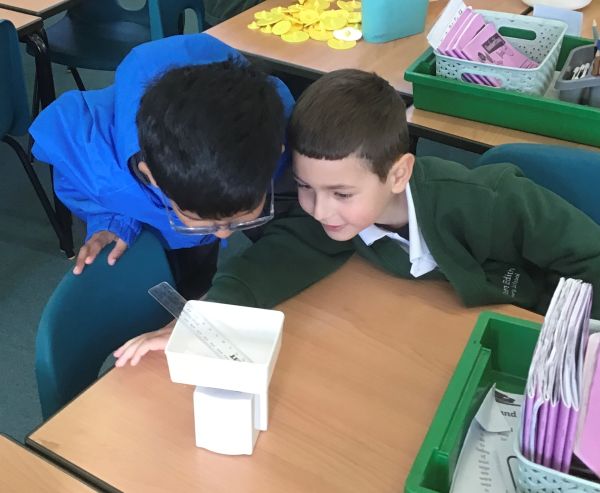
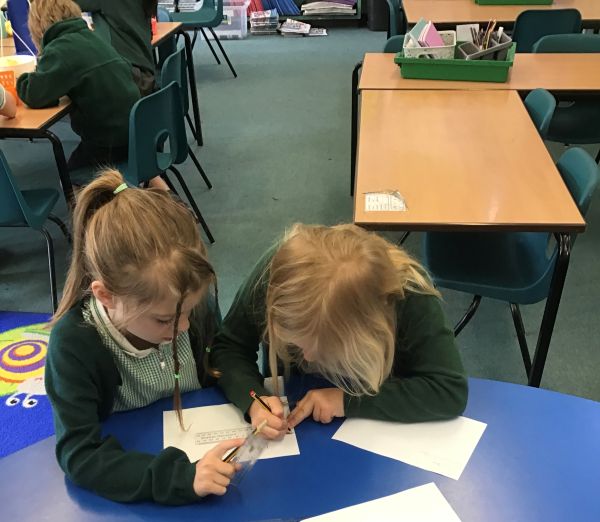
In Maths, the Year 2 children took part in lots of activities to make measurements. They investigated volume and capacity with water, drew lines of specific lengths and measured different items in the classroom. Finally they used balance scales and dial scales to find the mass of classroom objects.
Academic Year 2024-2025 Spring
Nursery
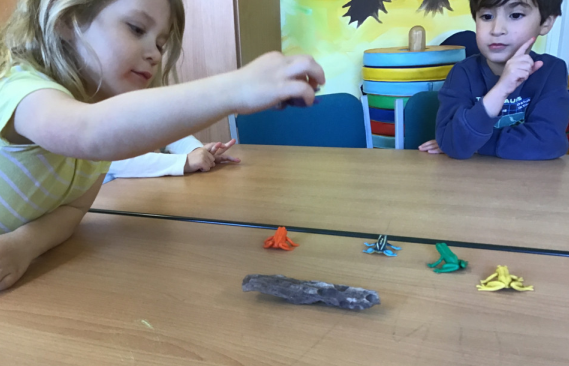
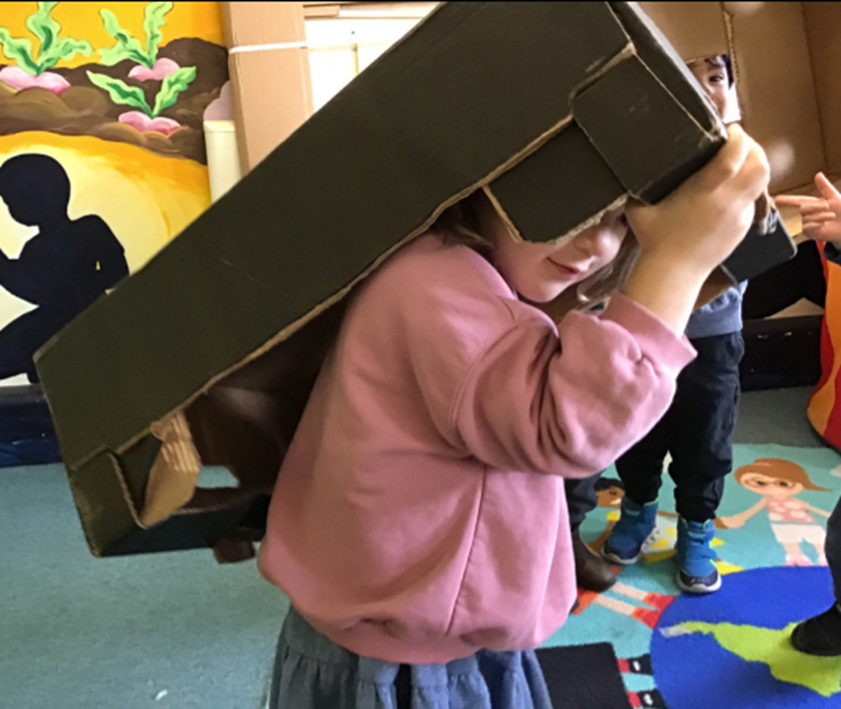
Children in nursery have been learning positional language. We played a game when they had to listen carefully to the instruction and then stand in the box, next to the box or under the box!
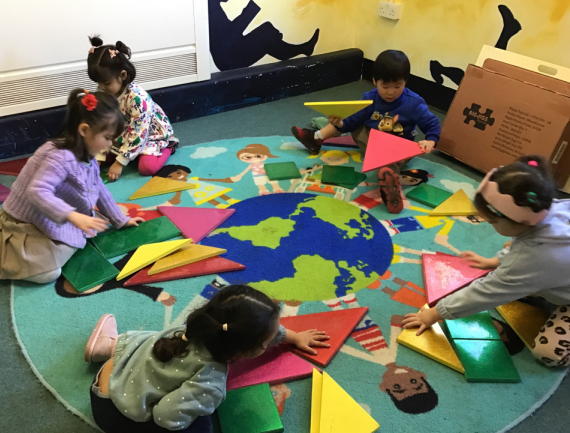
This half term, we have been learning the story of Mr Gumpy’s outing by John Burningham. The children used 2D shapes to make their own boat pictures. We have also been enjoying a range of counting and number songs with props.
Year 1
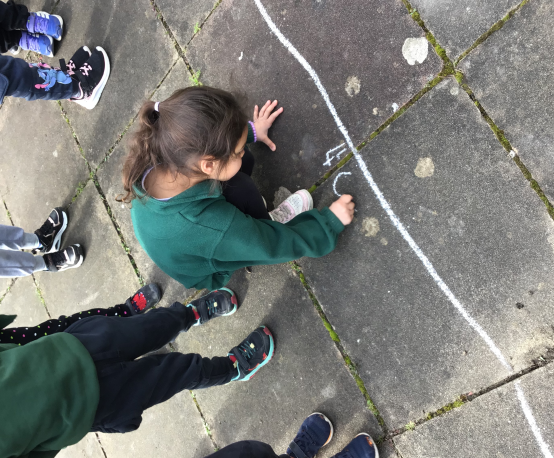
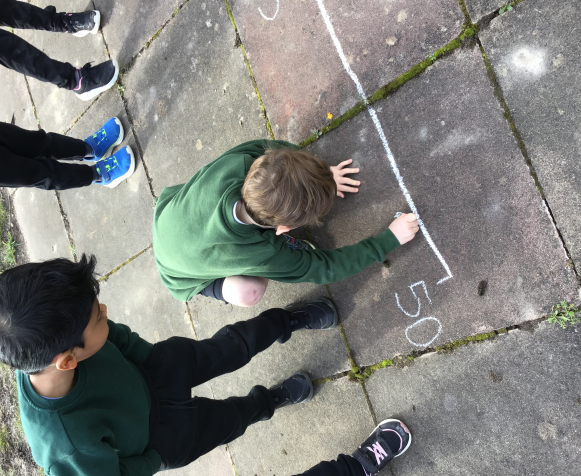
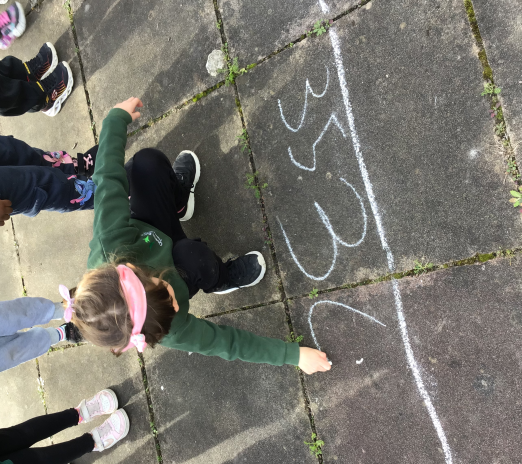
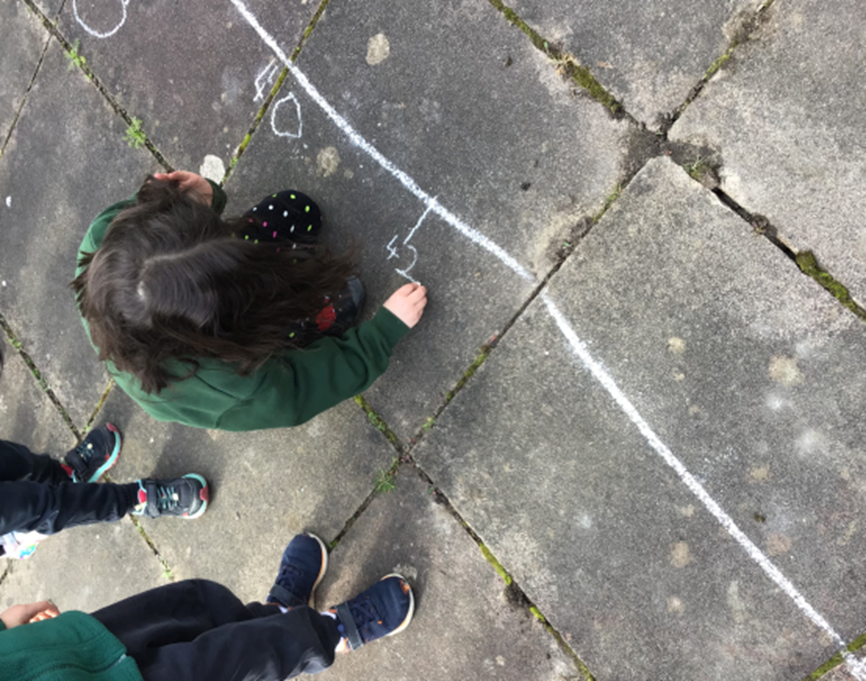
In Year 1 we have been learning all about place value to 50. We have been practicing counting forwards and backwards to 50 and have particularly enjoyed going outside and filling in our own number lines within 50 with chalk. "It was really fun estimating (that means making a really good guess) where the different numbers go on the number line! We had to make sure we found the middle first." - Chloe (Iris Class)
Year 2
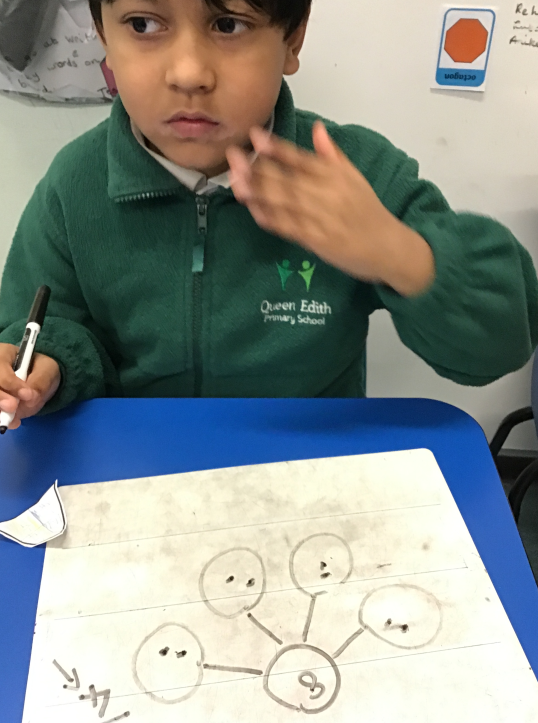
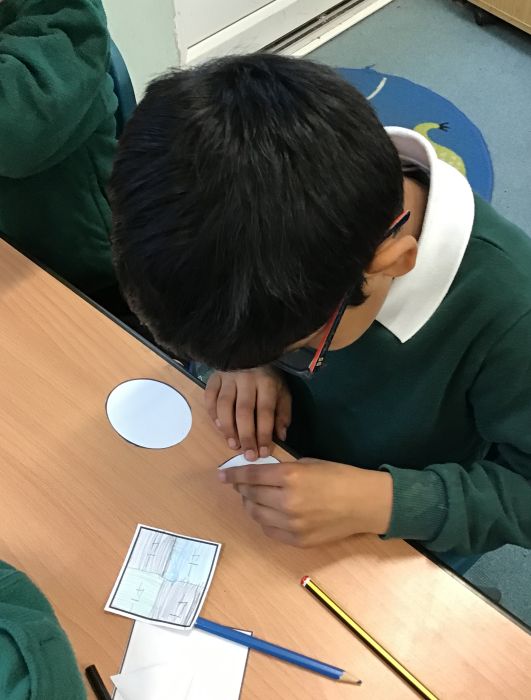
The children in Year 2 learnt about fractions. They found out about halves, thirds, quarters and a whole. They practised finding different fractions of amounts and shapes.
Year 3
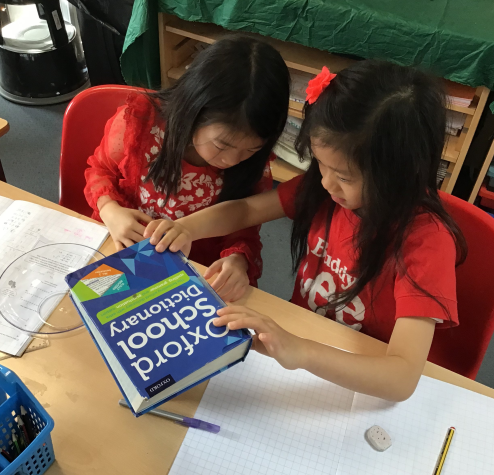
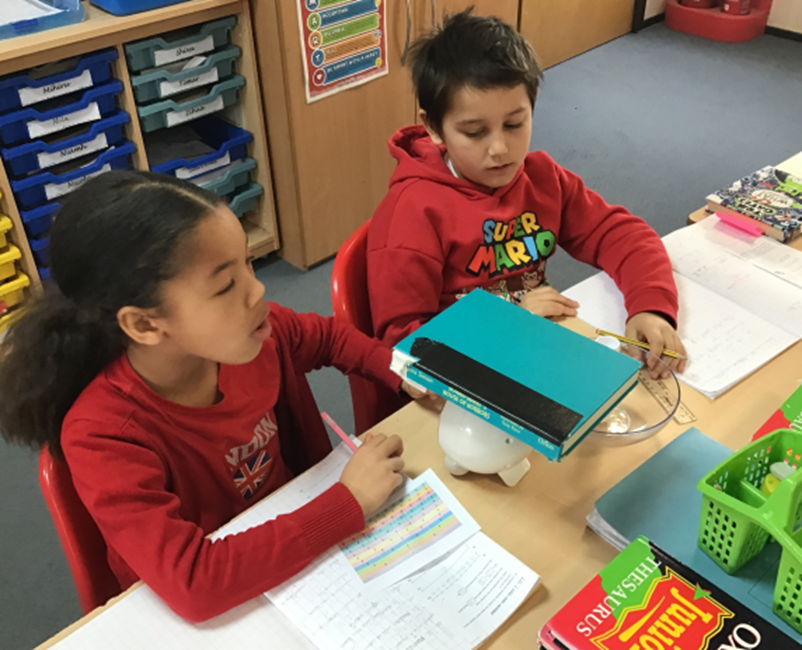
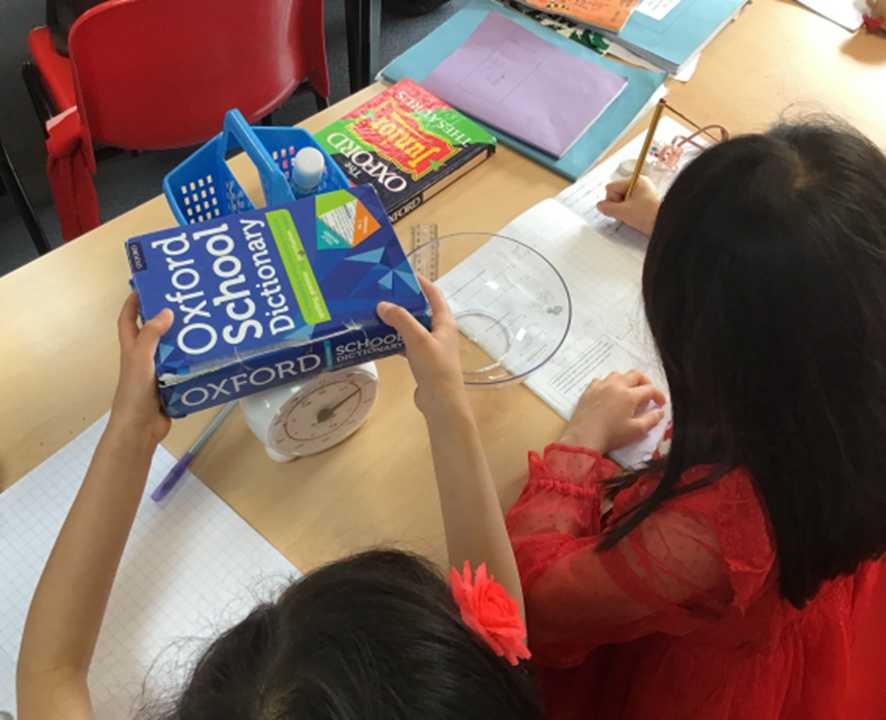
Here are some amazing photos of practical lessons that have been happening in Year 3 whilst they were learning about weight.
Year 4
In Year 4, we have been making paper airplanes as part of a practical lesson. We first made the airplanes and labelled them with the measurements of each side. After that we went outside and threw them as high as we could. Then we measured the distance the travelled. -Year 4 Child
In Year 4 we looked at adding 4-digit numbers together and we created 'Build It, Say It, Write It' posters for our display to show different methods to work out the answers.
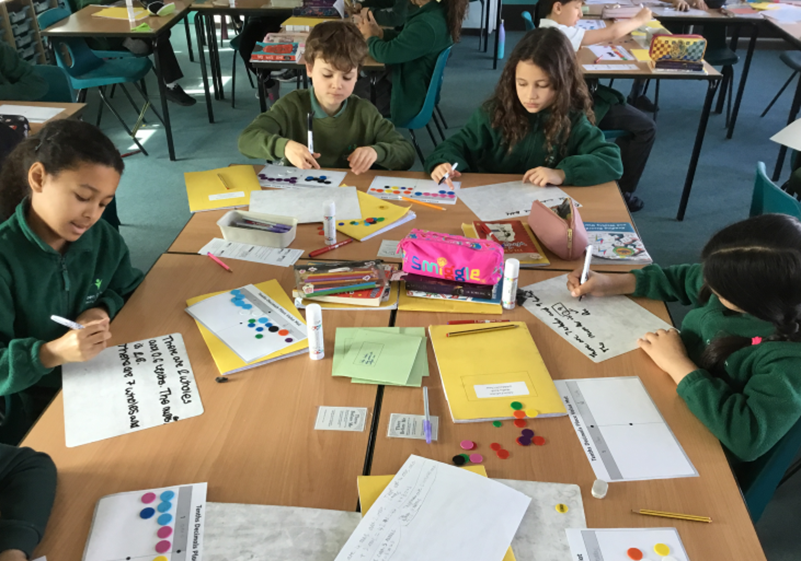
We have used Place Value Charts and counters to show how to divide by 10 and then we wrote the answers as decimals.