Design and Technology
Queens’ Federation: Design Technology Subject Statement
Intent
At the Queens’ Federation we aim to foster ‘Learning for Life.’
We will provide a rich, relevant and inspirational curriculum that promotes a lifelong love of learning and equips our pupils with the key knowledge and understanding, skills and personal qualities that they will need to thrive in a rapidly changing world. Our curriculum is designed to be relevant to our children and is linked to the context of our school and the local community.
The intent of our Design Technology curriculum is to provide opportunities for pupils to learn and apply skills required in the designing, making and evaluating of an effective product for a specific user and a given purpose.
Design and technology lessons will enable pupils to learn about the world in which we live. They will inspire them to think independently and innovatively and use their creativity and imagination to design and make products that solve real and relevant problems within a variety of contexts. Pupils will be given opportunities to reflect upon past and present design technology, its uses in daily life, the wider world and its effectiveness.
Implementation
Our Design Technology curriculum is built around five key elements: mechanisms, construction, food technology, textiles and electrical systems. Each area is revisited, building upon pupils' prior knowledge and understanding of each element. Skills and knowledge are built upon year by year and are sequenced appropriately to maximize learning for all pupils. Throughout each element, pupils will follow the cycle of research, design, make and evaluate. The design process will be based on real life, relevant contexts which provide meaning to learning. While making, pupils will be given choice and a range of tools to choose freely from. When evaluating, pupils will be able to evaluate their own products, adapting and improving them against design criteria. Each stage will be given equal weighting and evidence of each stage will be seen in Design Technology books. Pupils will be made aware of health and safety issues related to all tasks undertaken.
Our Design and Technology curriculum is enriched, wherever possible, through links to learning in other curriculum areas such as mathematics, science, computing and art. Our curriculum is enhanced through the use of visits and visitors.
We view assessment as a holistic process, which takes place in every lesson through observation of, in questioning and in conversation with pupils and in the production of written outcomes. Design Technology assessment criteria set out the key knowledge and skills that a pupil should achieve at the end of each unit of work.
Impact
Our curriculum aims to ensure that pupils leave the Queens’ Federation with the skills, knowledge and understanding to become discriminating and informed users of products and innovative citizens. It will enable pupils to develop a greater awareness and understanding of how everyday products are designed and use their creativity and imagination to create their own high quality products. Pupil outcomes evidence a broad and balanced design and technology curriculum and at the end of each year, pupils achieve age related expectations and retain the knowledge and skills learnt from each unit of work.
Yearly Overview
Design and technology at Queen Edith is linked very closely to the class topics taught in each half term. Below is a table which shows the projects children complete in the different year groups. For each DT unit there is an opportunity to investigate and evaluate current products. New practical skills are taught and practiced for each unit to ensure progression throughout the school, and the children then use their prior knowledge and new learning to design, make and evaluate a product. This product is always a ‘real’ product to solve a real problem or to serve a real purpose for the specified user.
| Autumn 1 | Autumn 2 | Spring 1 | Spring 2 | Summer 1 | Summer 2 | |
|---|---|---|---|---|---|---|
| Year 1 |
|
Design, Make and Evaluate: Moving vehicle toy Focus: Mechanical Systems (Wheels and Axles) |
|
Design, Make and Evaluate: 2D castle picture with moving parts Focus: Mechanical Systems (Sliders and Levers |
|
Design, Make and Evaluate: Fruit salad Focus: Cooking and Nutrition (Know where food comes from / Fruits and vegetables / 5 a day) |
| Year 2 |
|
Design, Make, Evaluate: Fairytale freestanding structure Focus: Structures |
|
Design, Make and Evaluate: Sandwich Focus: Cooking and Nutrition (Eatwell Plate) |
Design, Make and Evaluate: Felt butterfly Focus: Textiles (Templates and Joining Techniques) |
|
| Year 3 |
Design, Make and Evaluate: Gift boxes Focus: Shell Structures (Using CAD) |
Design, Make and Evaluate: Page for a popup book Focus: Mechanical Systems (Levers and Linkages) |
Design, Make and Evaluate: Feast of local produce Focus: Cooking and Nutrition (Healthy and Varied Diet – From Source to Plate) |
|||
| Year 4 | . |
Design, Make and Evaluate: Roman banner Focus: Textiles (2D Shape to 3D product) |
Design, Make and Evaluate: Torches Focus: Electrical Systems (Simple Circuits and Switches) |
Design, Make and Evaluate: Flatbread Focus: Cooking and Nutrition (Healthy and Varied Diet – Kneading & Various Preparation Techniques) |
||
| Year 5 |
Design, Make and Evaluate: Viking longboat toy Focus: Mechanical Systems (Cams) |
Design, Make and Evaluate: Animal enclosures for Reception class zoo toys Focus: Structures (Frame Structure) |
Design, Make and Evaluate: Food product for Mini Enterprise Focus: Cooking and Nutrition (Celebrating Seasonality |
|||
| Year 6 |
Design, Make and Evaluate: Tablet/phone case Focus: Textiles (Combining Different Fabric Shapes) |
Design, Make and Evaluate: Fairtrade Café Focus: Cooking and Nutrition (Celebrating Culture) . |
Design, Make and Evaluate: Fairground carousels Focus: Electrical Systems (Monitoring and Control) |
For more information please click on the link to view our Design and Technology Policy on our Policies page.
Examples Of Learning
Academic Year 2025–2026
Year 2
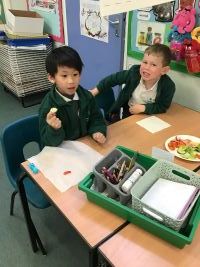
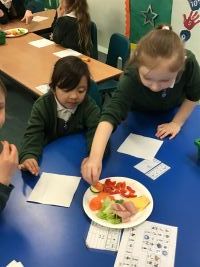
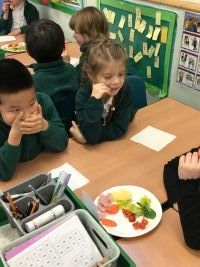
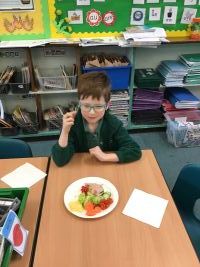
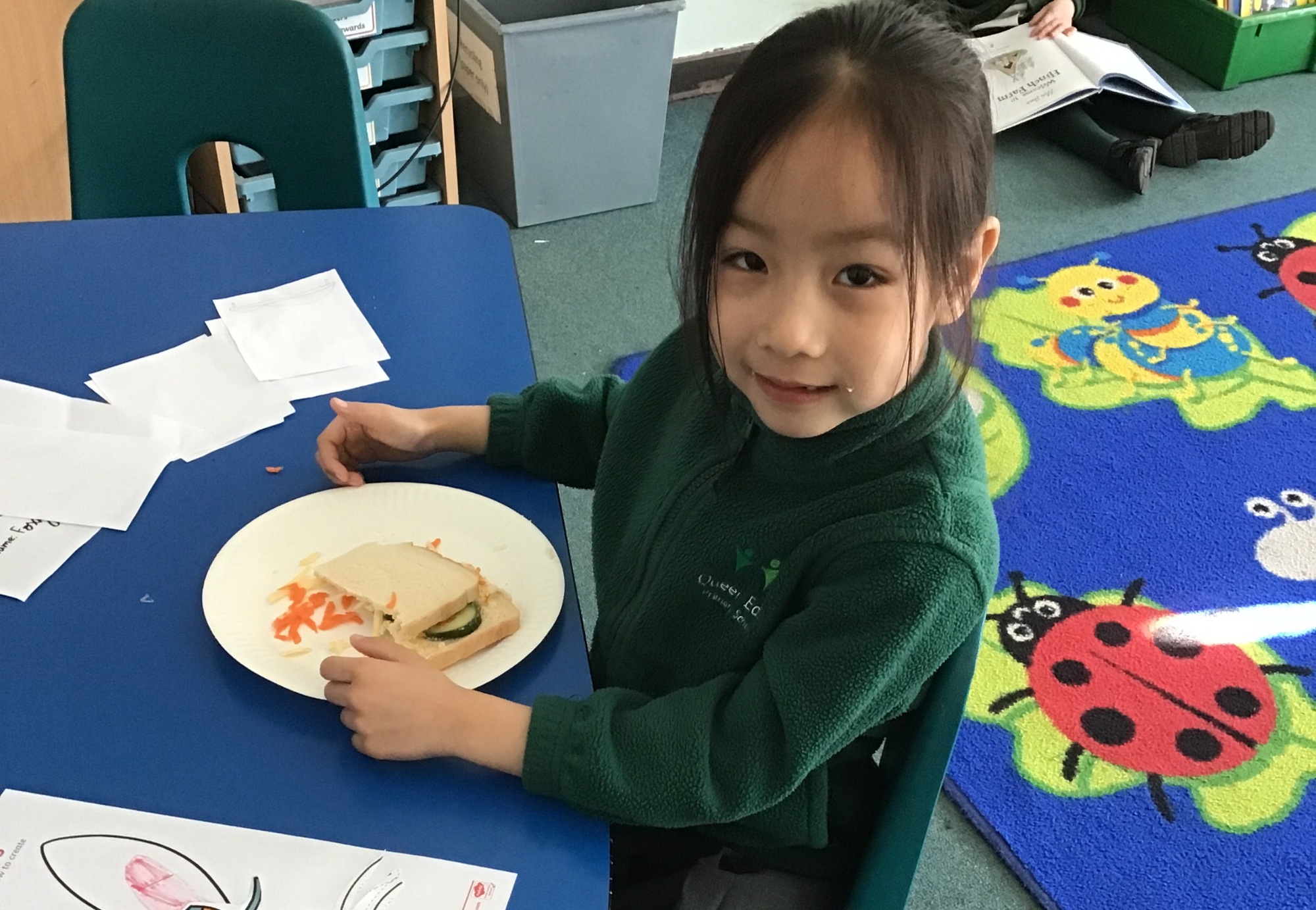
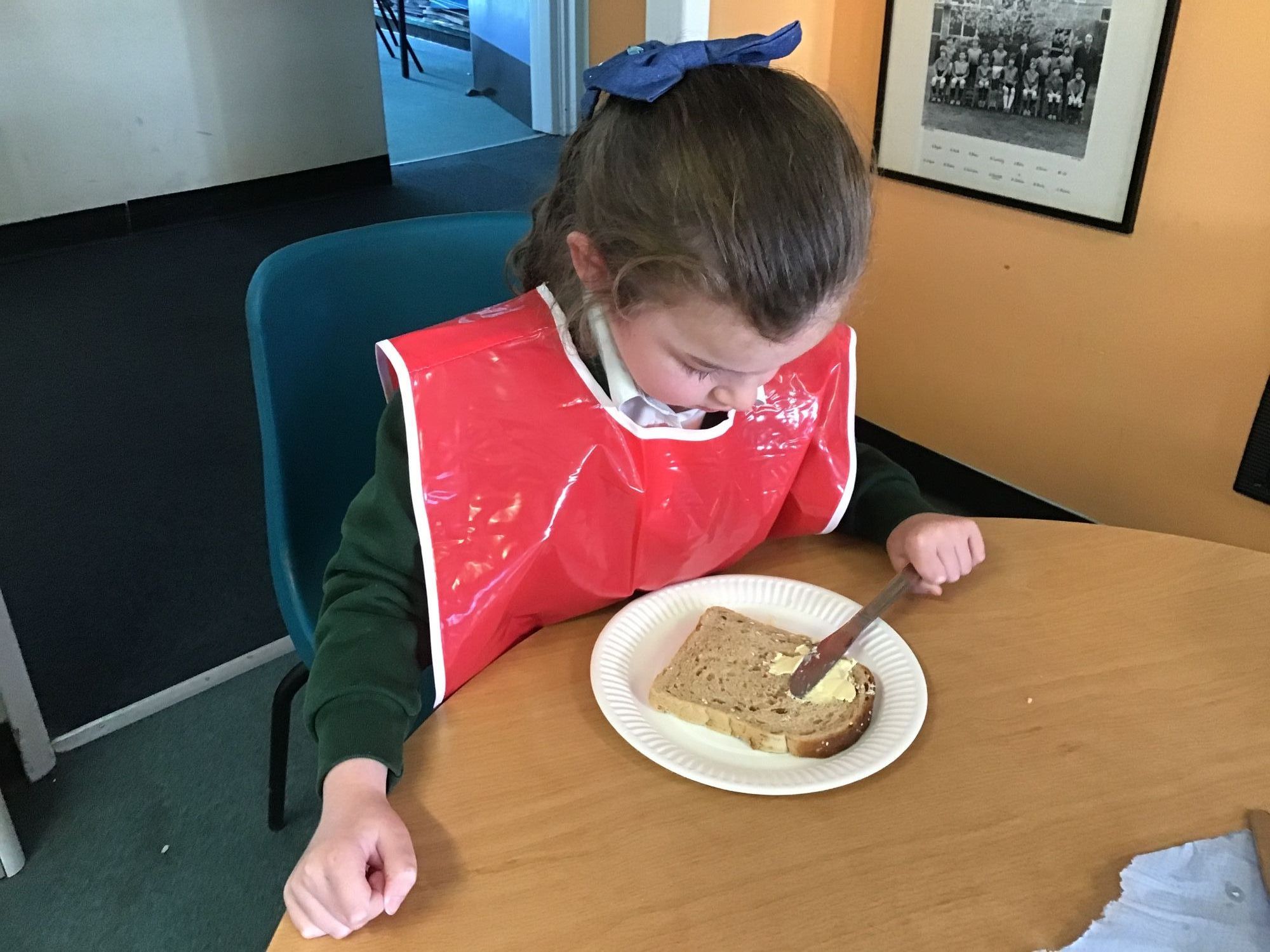
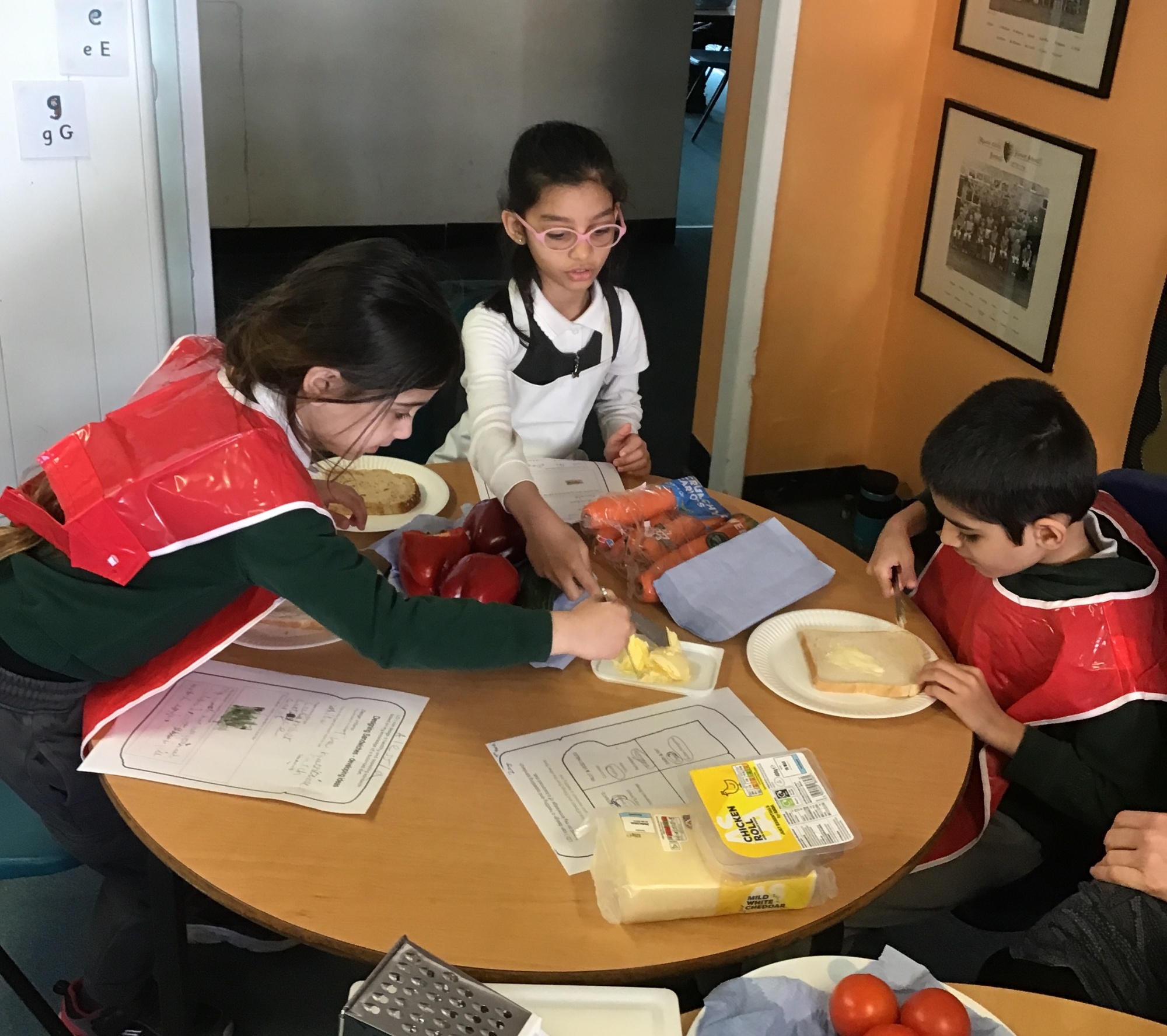
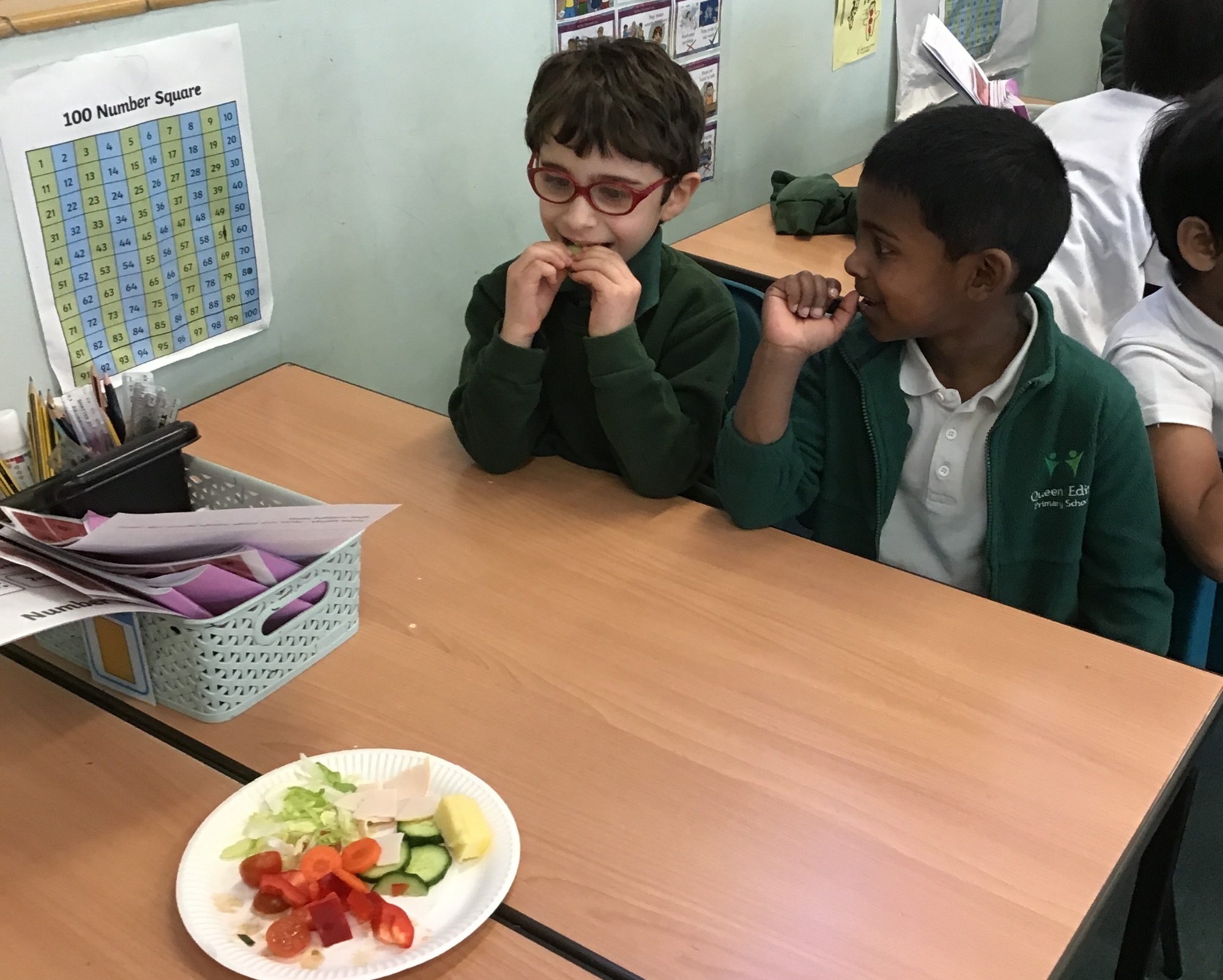
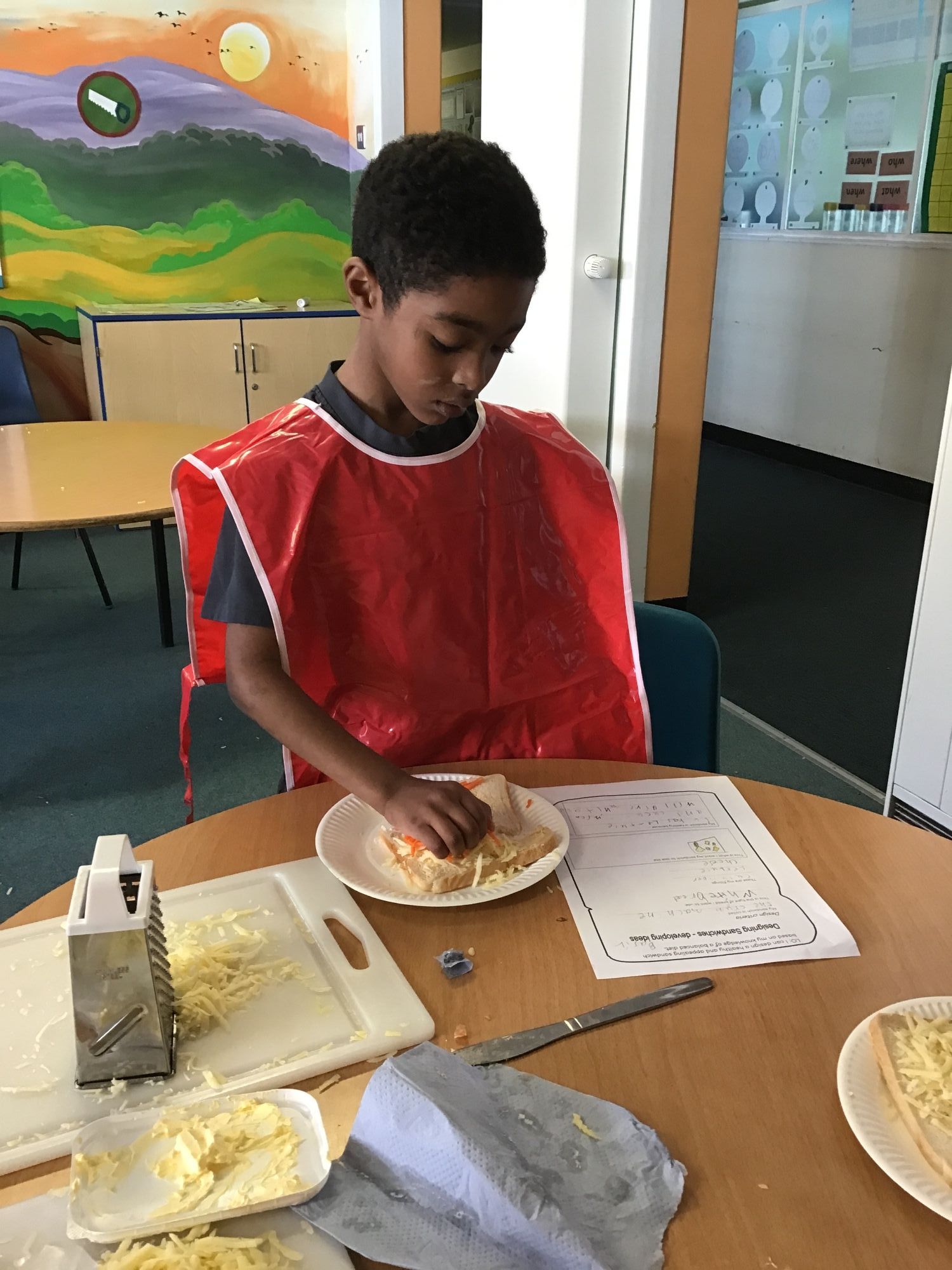
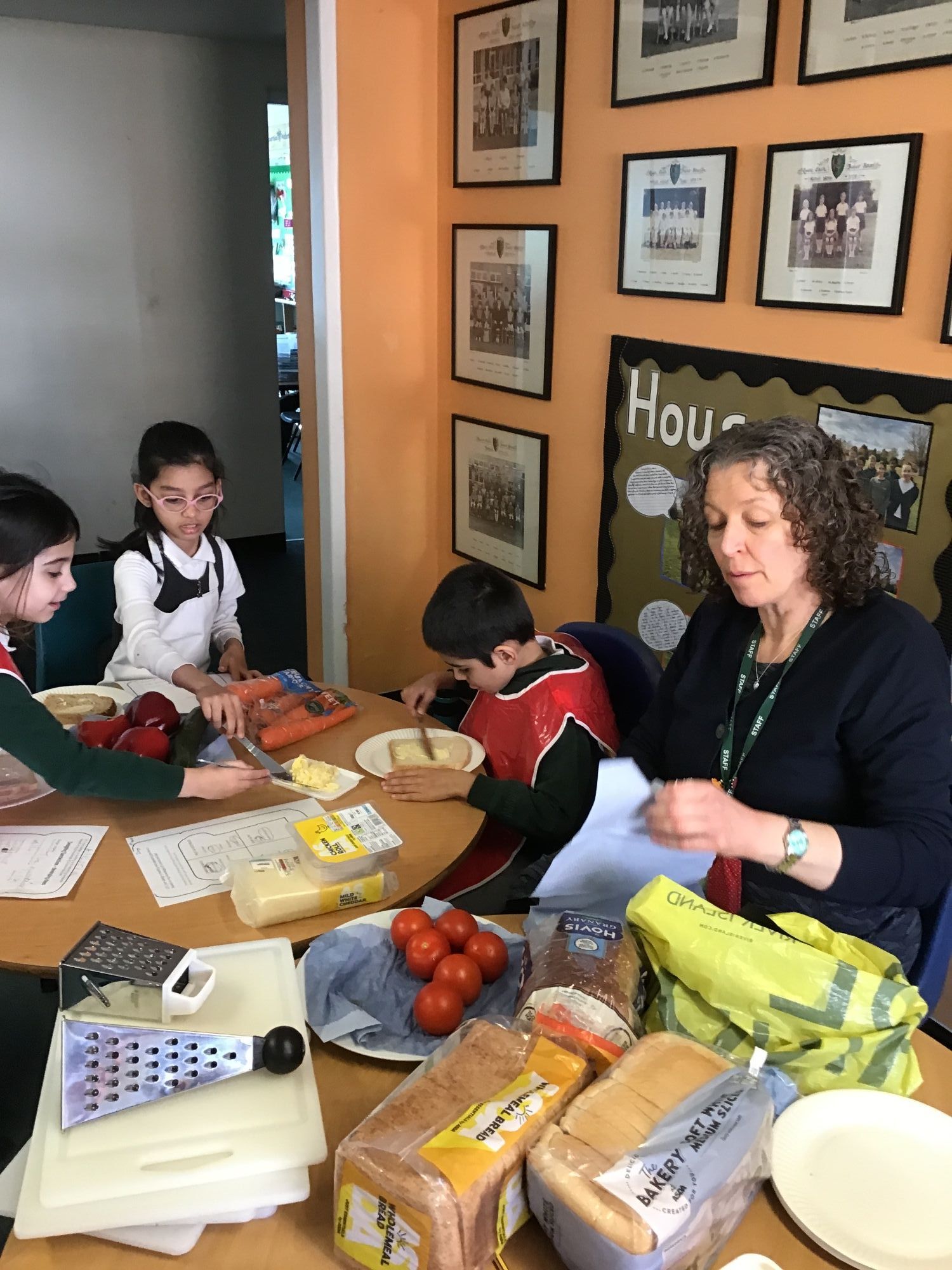
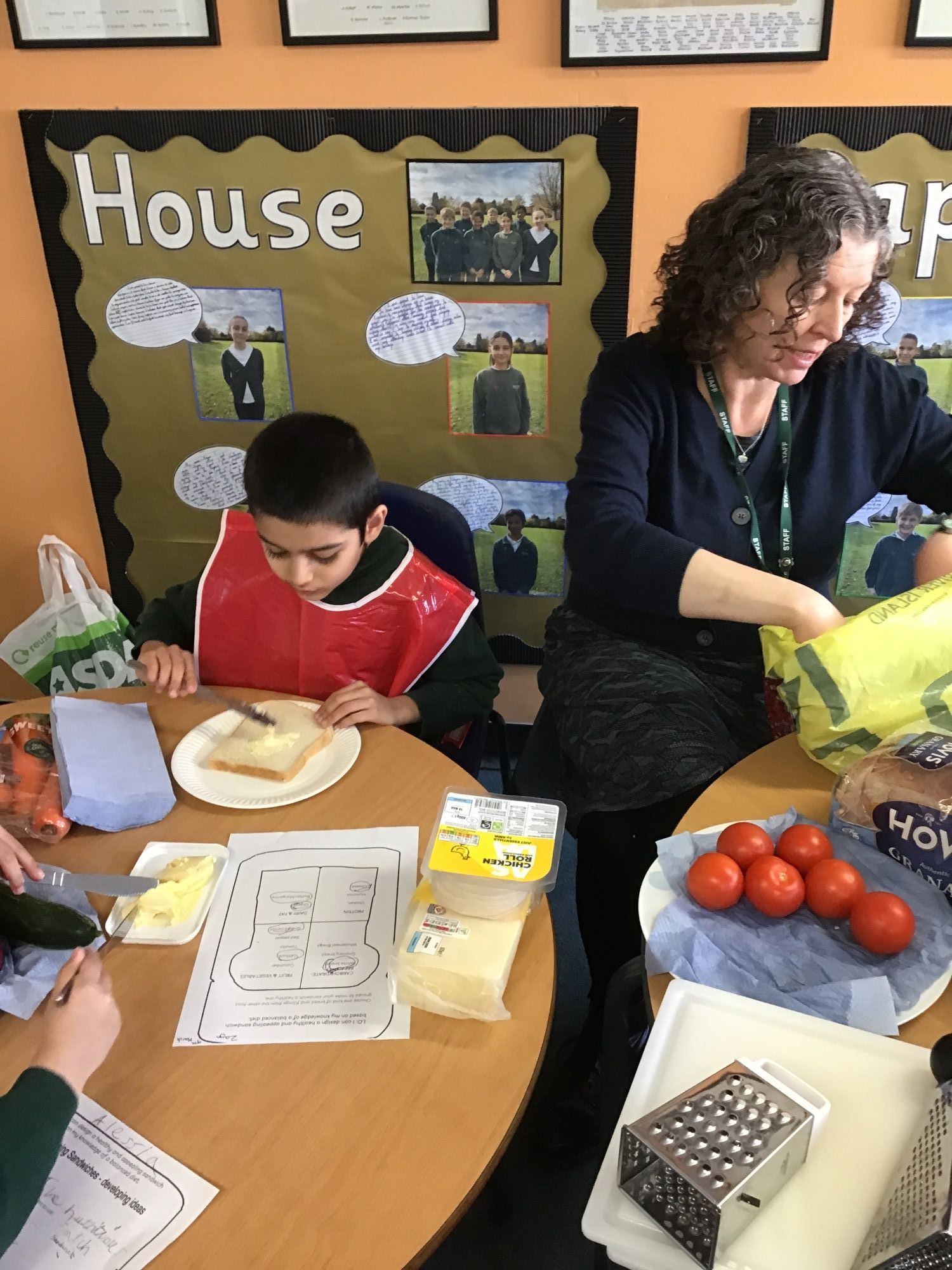
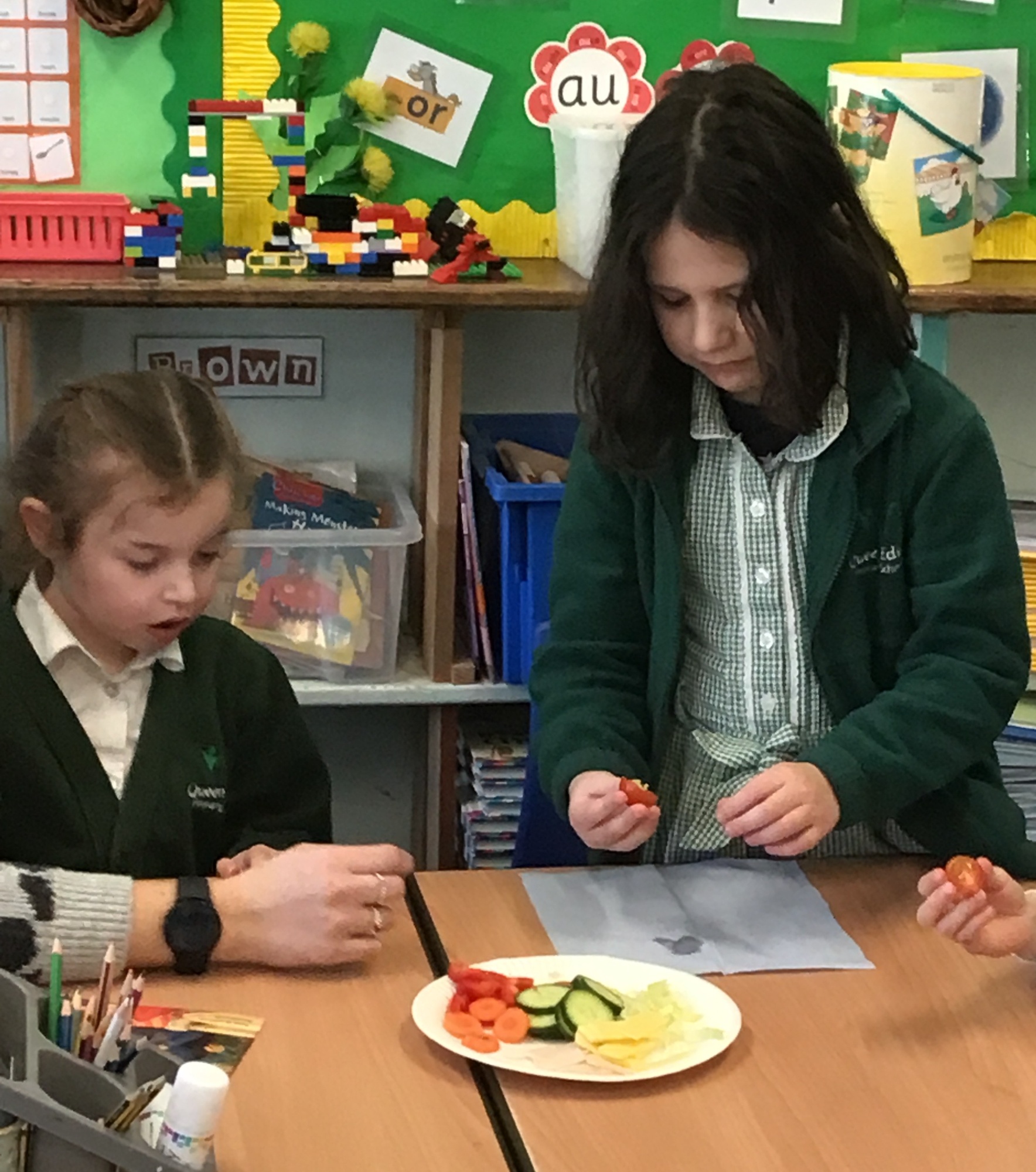
In Year 2, the children enjoyed designing and making their own healthy sandwiches. They explored a variety of fillings, tasting different options before deciding what to include in their creations. The children practised important food preparation skills, safely using equipment such as peelers, graters, chopping boards and serrated knives. The results were delicious, and everyone was proud of their healthy and creative sandwiches.
Academic Year 2024–25
Year 1
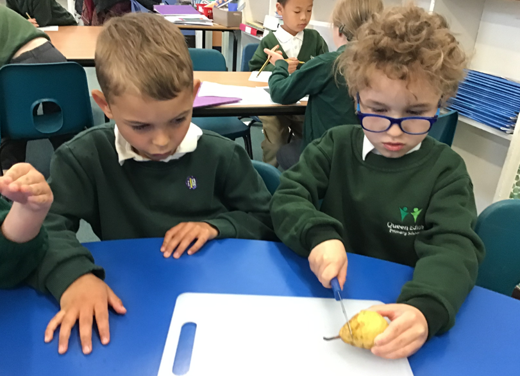
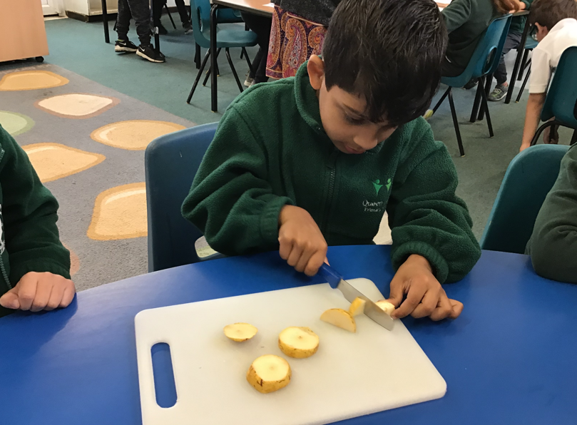
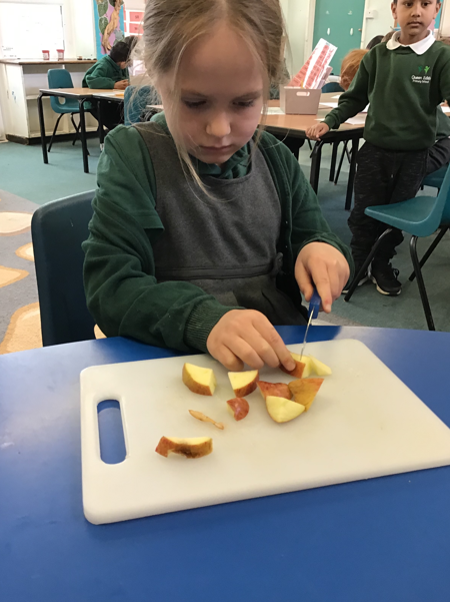
In Year One we have been enjoying learning about foods that keep our bodies healthy and we are going to make a healthy fruit salad. We learned how to use a knife safely to chop and slice fruit in preparation for making our fruit salad.
Year 2 Healthy Sandwiches
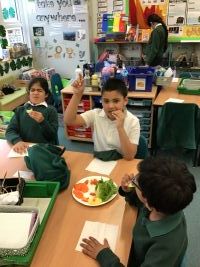
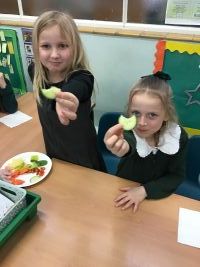
In DT, the children enjoyed tasting different foods to create a filling for a healthy sandwich. They explored the textures and flavours, using words like bitter, sweet, juicy, sour, watery, crunchy, soft and hard to describe each item. After tasting, they each selected three ingredients to include in their own healthy sandwich. It was a fun and delicious way to learn about food choices.