Art and Design
Queens’ Federation: Art Subject Statement
Intent
At the Queens’ Federation we aim to foster ‘Learning for Life.’
We will provide a rich, relevant and inspirational curriculum that promotes a lifelong love of learning and equips our pupils with the key knowledge and understanding, skills and personal qualities that they will need to thrive in a rapidly changing world. Our curriculum is designed to be relevant to our children and is linked to the context of our school and the local community.
At the Queens’ Federation, we believe that art is a valuable part of a child’s education. Our art curriculum aims to develop creativity, engage and inspire pupils and equip them with the knowledge and skills to experiment, invent and create their own works of art, craft and design. As pupils progress, they will develop their critical abilities and their understanding of the visual language of art and design including line, tone, texture, colour, pattern, shape and 3D form.
Implementation
Our art curriculum, is designed to support pupils to develop an understanding of their own cultural heritages and the cultural heritages of others through the study of a diverse range of artwork and artists, both locally, nationally and internationally. Pupils will experience a wide range of media and tools and will have the opportunity to apply their understanding of this media in a range of contexts. Skills and knowledge are built upon year by year and are sequenced appropriately to maximise learning for all pupils. Lessons offer opportunities for experimentation and exploration in addition to the production of finished piece of work.
Our art curriculum is enriched through careful links to other areas of the curriculum and is further enhanced through the study of inspirational artists and renowned pieces of work. Alongside this exploration, first hand experiences such as visits, trips, use of the local area and workshops with local artists provide pupils with a real life context on which to base their artwork.
We view assessment as a holistic process, which takes place in every lesson through observation of, in questioning and in conversation with pupils and in the production of art and design outcomes. Art assessment criteria set out the key knowledge and skills that a pupil should achieve at the end of each unit of work.
Impact
Pupils leave the Queens’ Federation with an appreciation and understanding of art in the world around them. They are equipped with the knowledge and skills to experiment, invent and create their own works of art, craft and design and view themselves as artists, whose art style is important and valued. Pupils have a clear understanding of how art and design both reflect and shape our history and contribute to the culture and creativity of our locality, nation and world. Pupil outcomes evidence a broad and balanced art curriculum and at the end of each year, pupils achieve age related expectations and retain the knowledge and skills learnt from each unit of work.
‘Every child is an artist.’
Pablo Picasso.
At its heart, Art is a subject that should engage people of all ages creatively, intellectually and personally.
The Art curriculum we deliver at Queen Edith’s aims to inspire and challenge children from Reception to Year 6. It strives to build skills and knowledge, year on year, thus equipping children to develop their curiosity as well as their ability to experiment with a finite number of resources, but an infinite measure of imagination.
We believe art and design needs to enable children to express themselves and their perception of the world around them using different media and stimuli.
In addition we aim to cultivate an appreciation of the artists that they learn about, and hope to nurture a deep sense of curiosity and understanding of artwork that they encounter.
Here at Queen Edith’s, Art also aims to be a method of expression, showing evidence of understanding, transferable across all subject areas.
The National Curriculum states; pupils “should be able to think critically and develop a more rigorous understanding of art and design. They should also know how art and design both reflect and shape our history, and contribute to the culture, creativity and wealth of our nation.”
After building on the basic skills required to use the tools and media we offer, effectively, we aim to enable children to progress in their fluency of expression within these limitations. On a practical level, we encourage the development of artistic responses to concepts and experiences that children encounter, as well as learning basic artistic strategies to enable their expression. Additionally, we aim to expand the understanding and appreciation of art through history. How it can mirror the moods of society as it evolves, embrace the progression of artistic techniques and utilise developing media for expression on many levels.
Art Lead
Queen Edith Primary
| Autumn | Spring | Summer | |
|---|---|---|---|
|
EYFS |
Autumn pictures. Exploring media and materials. Exploring instruments. Moving to music. Developing role play areas alongside children's interests. Firework art. Designing gingerbread men. Christmas cards and artwork. Developing narrative in play. Exploring sound and colour. Christmas songs. Artwork of the month. Painting and printing autumn colours. Develop role play with children's interests. Encourage plan, do, review. |
Making a boat for the boy. Artwork of the month. Role play with children’s interests. Develop ‘plan, do, review’. Polar scene. Snowflakes. Ice music- cold sounds. Sensory tray. Penguin song. Snow song. Artwork of the month. Role play with children’s interests. Develop ‘plan,do, review’. Building and testing bridges. Design a troll. Troll kitchen in the garden. Observational drawing. Use of watercolours. |
Artwork of the month. Role play with children’s interests. Develop ‘plan, do, review’. Design a musical instrument. Make a house for the three pigs. BBC red riding hood songs. Butterfly painting. Clay minibeasts. Wax resist pictures. Artwork of the month. Role play with children’s interests. Develop ‘plan, do, review’ |
| Year 1 | Observational drawings of natural objects, using pastels. Fireworks using chalk. | Collage inspired by Rousseau. Mini medieval tapestries. | Monet inspired garden pictures. Press printing: Sea creatures. |
| Year 2 | Clay: High street model Collage: Princess and the Pea | Marbling: Fire and Ice Watercolour: Self-Portraits | Observational drawing Artists and their art from around the world (Africa, Australia, South America) |
| Year 3 | Clay: Making Greek pots Pointillism. Matisse. | Paisley Collage | Cave Art. Observational drawing of flowers. |
| Year 4 | Sculpture. Andy Goldsworthy. Modelling Emotions and Relationships. | Mosaic: Roman Art. | Islamic Patterns. Perspective Drawing. |
| Year 5 | Egyptian Death Masks. Clay Mummies. | African Animal Masks. | Mixed media: Abstract art inspired by Peter Thorpes Space Art. |
| Year 6 | Watercolour, charcoal, ink: Blitz Art. | Sculpture: Escher Models. | Colour, collage, mixed media: About me. |
For more information please click on the link to view our Art Policy on our Policies page.
Academic Year 2025-2026
Year 5
In Art, year 5 are making their own designs as an example of what Ancient Egyptians would use to make a pattern. They will be using some polyester to print their designs on. After, they’ll pick a coloured paint to print on their design and stamp it onto their well decorated Art books with help from their fabulous teachers Mrs Santocchini and Mrs Hook and amazing help from Miss Henry. Their printing will be based on Egyptian patterns .They’ll have paint of their choice. In the end the patterns were amazing. By Leonor in Silver Birch
Year 2
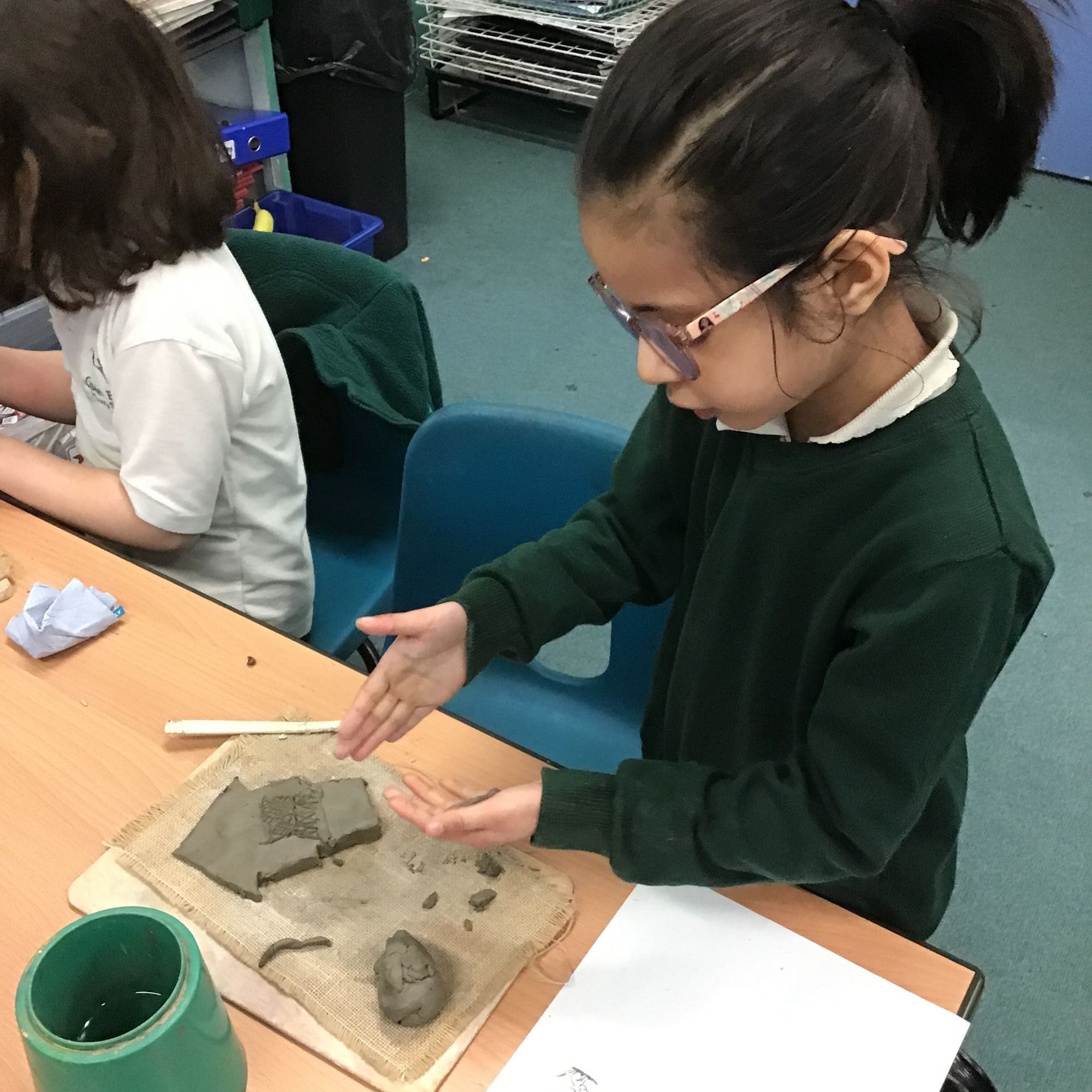
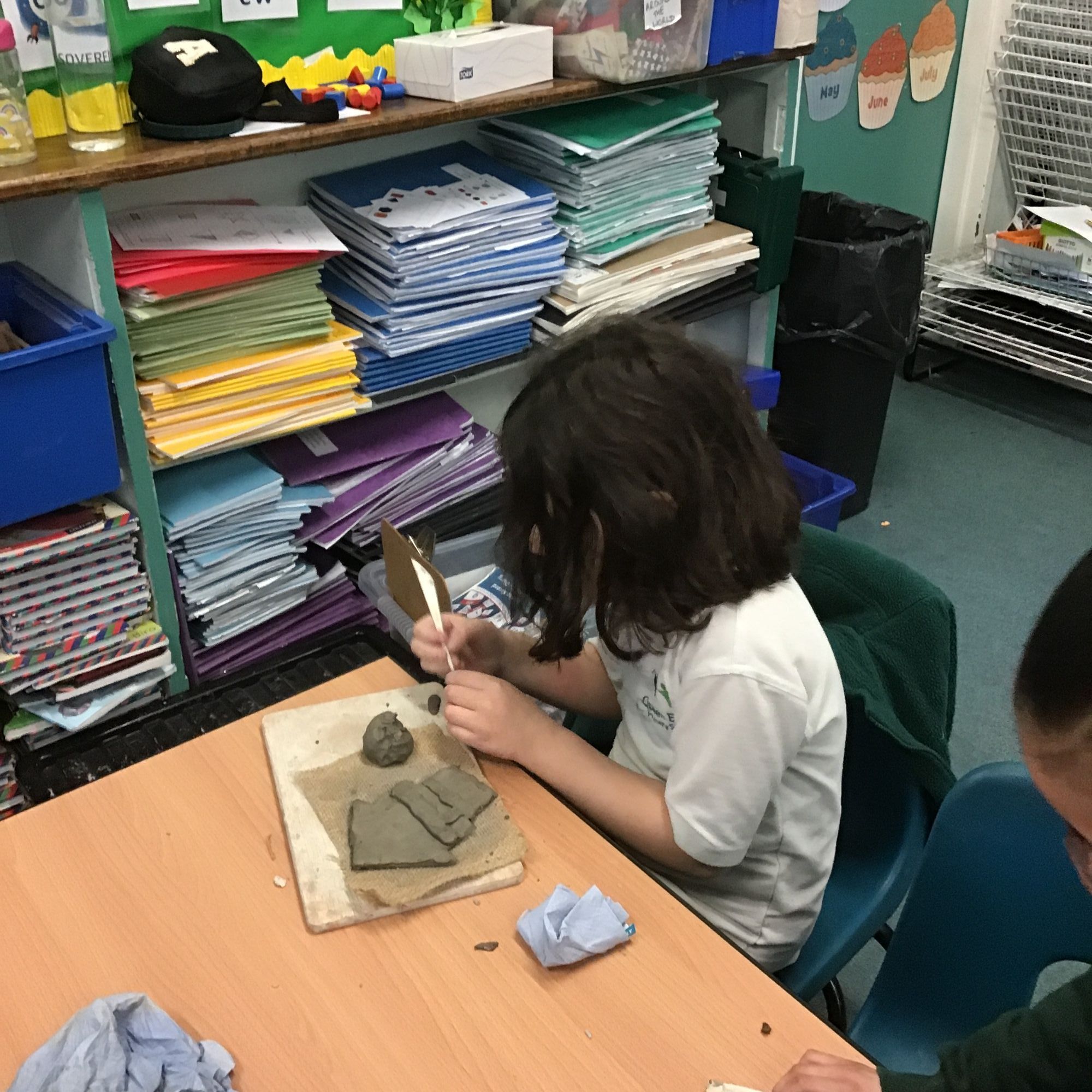
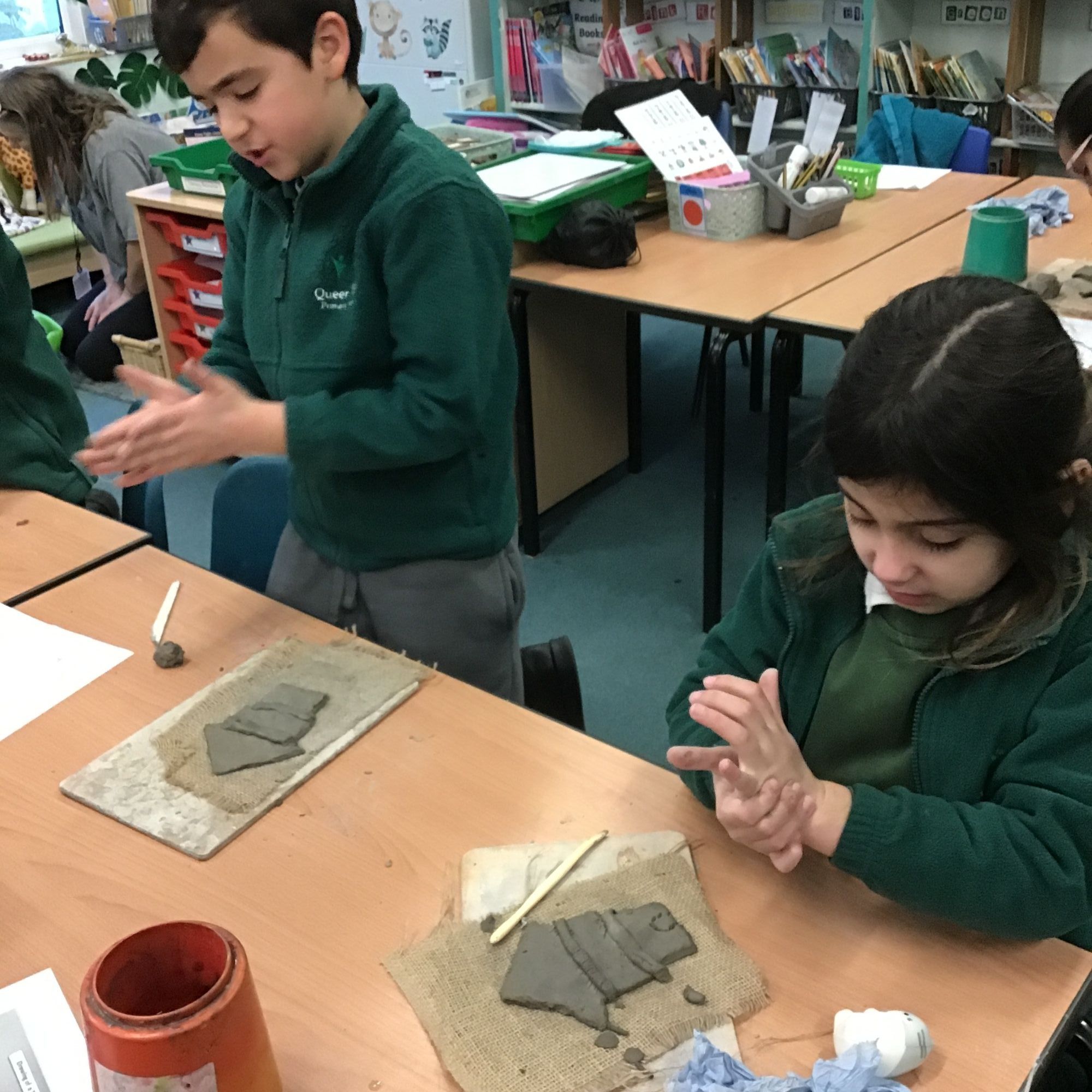
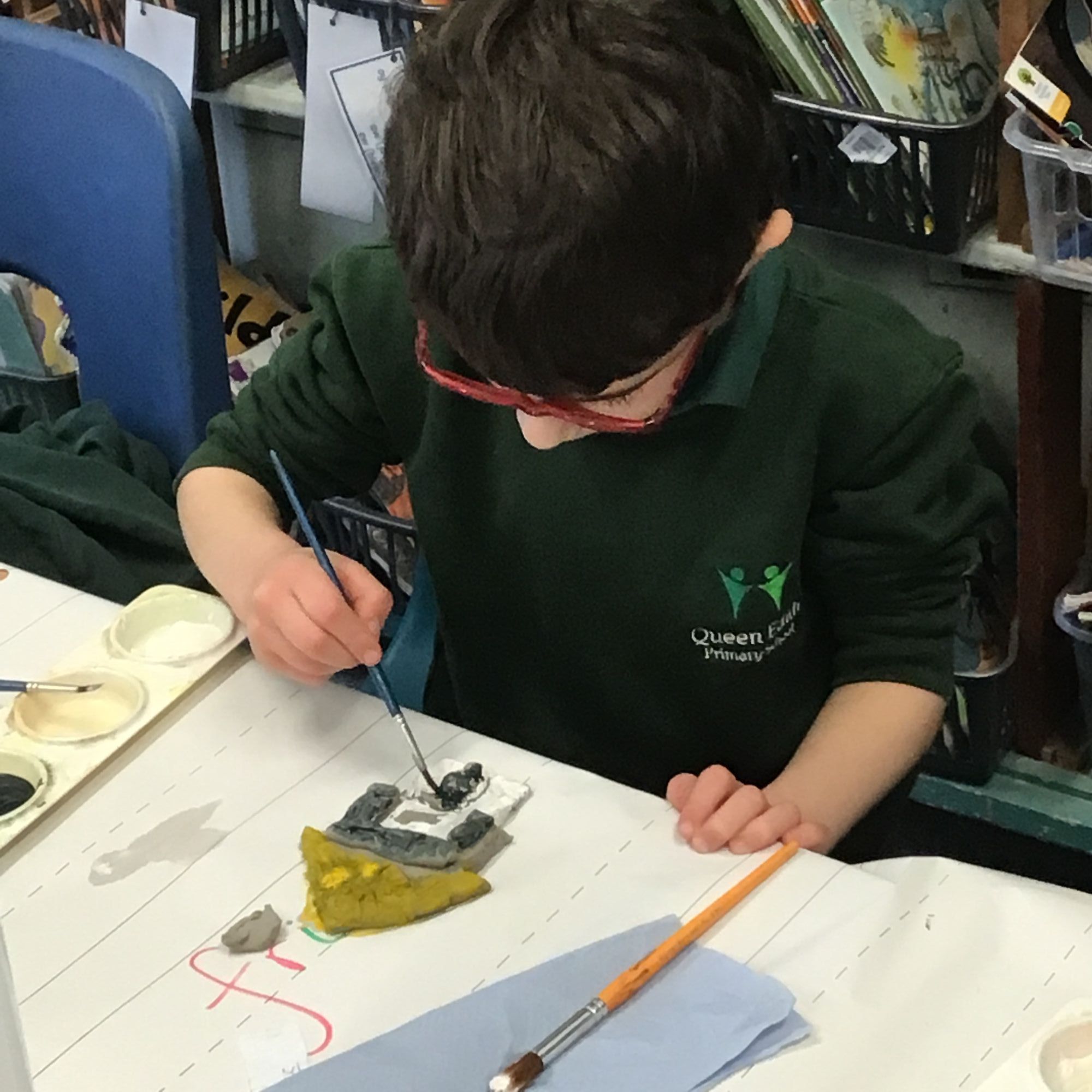
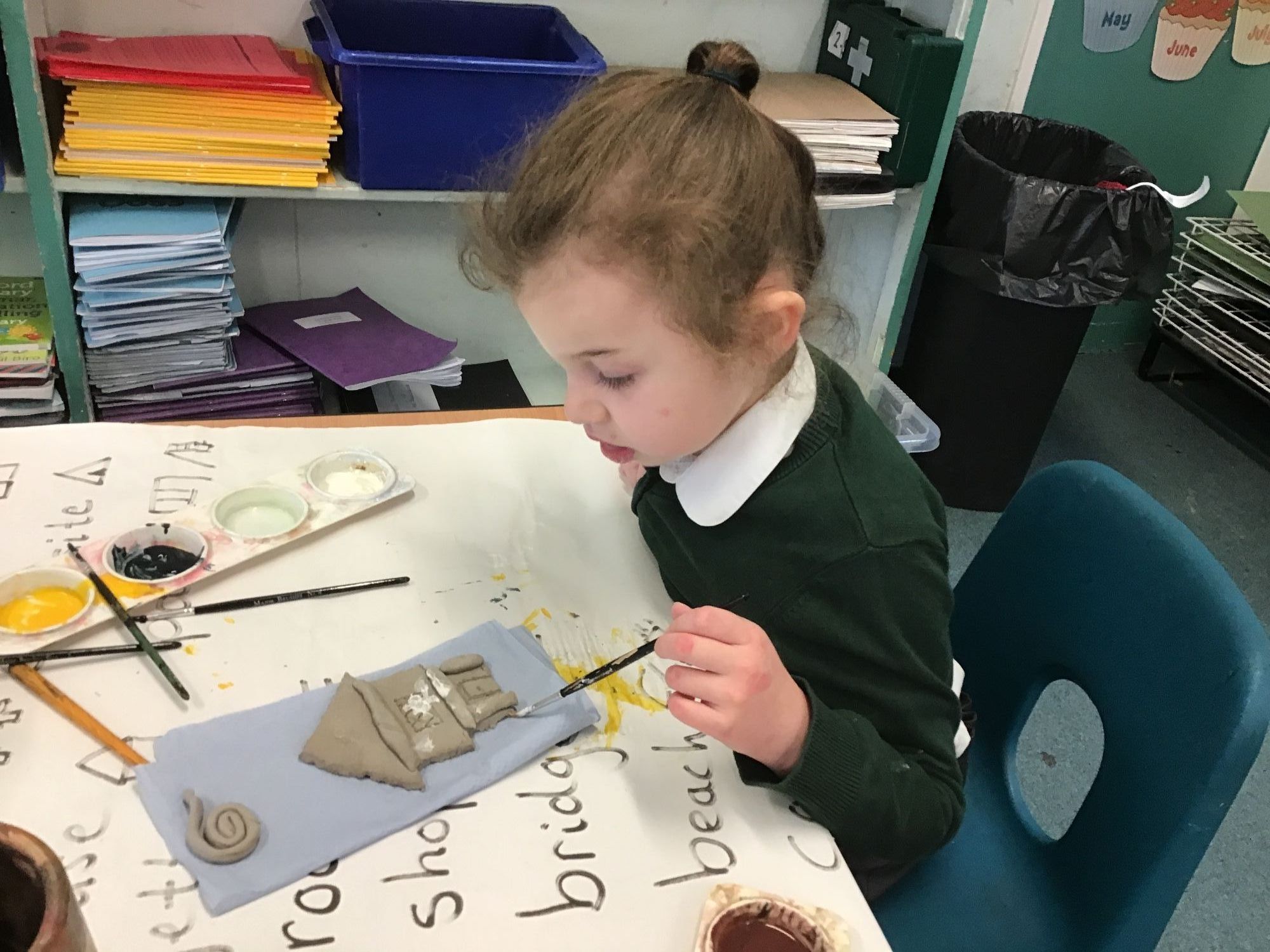
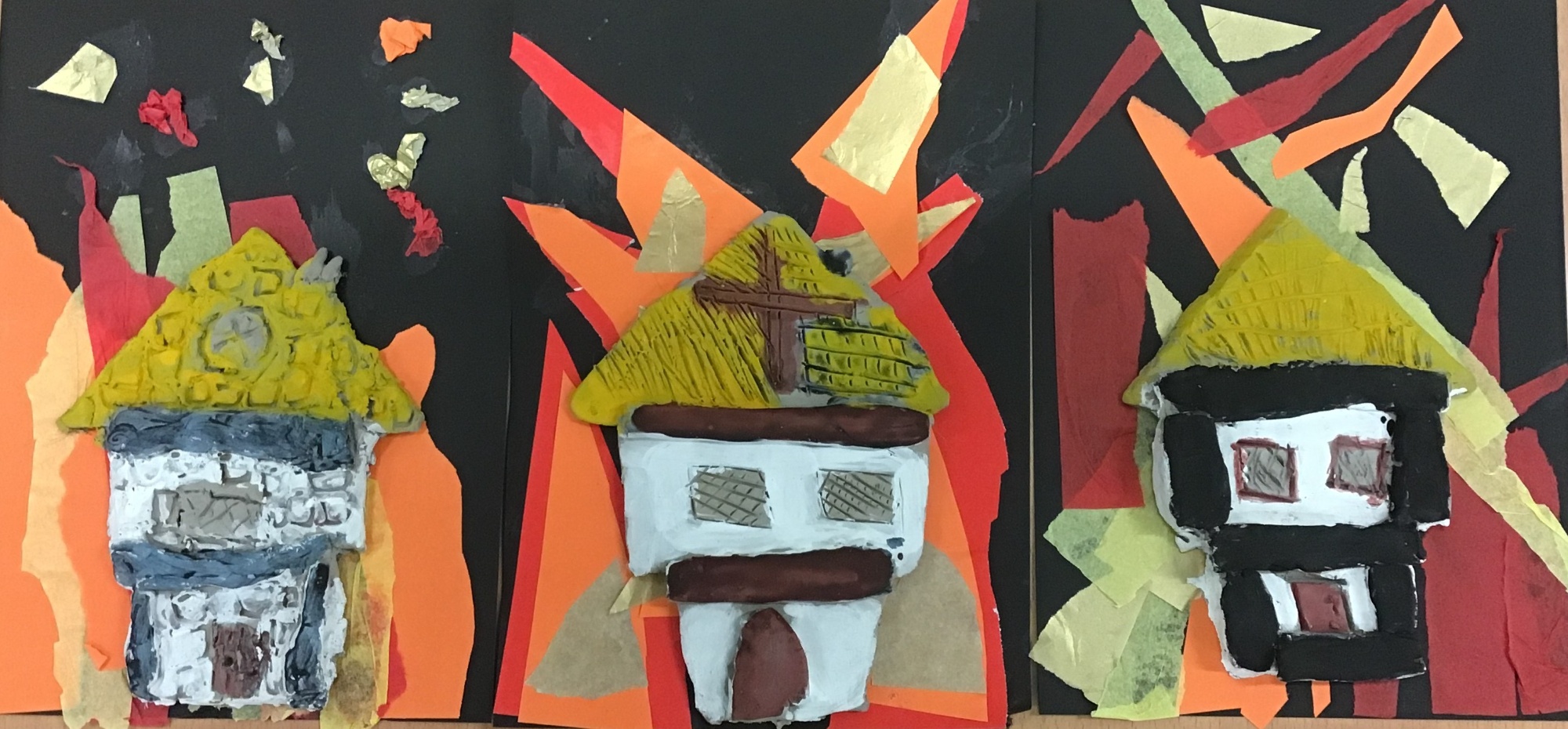
Year 2 had a fantastic time creating Tudor houses from clay as part of their Great Fire of London topic. They added timber frames, thatched roofs and leaded windows, carefully painting each house to bring it to life. Their creativity and attention to detail were brilliant.
Year 6
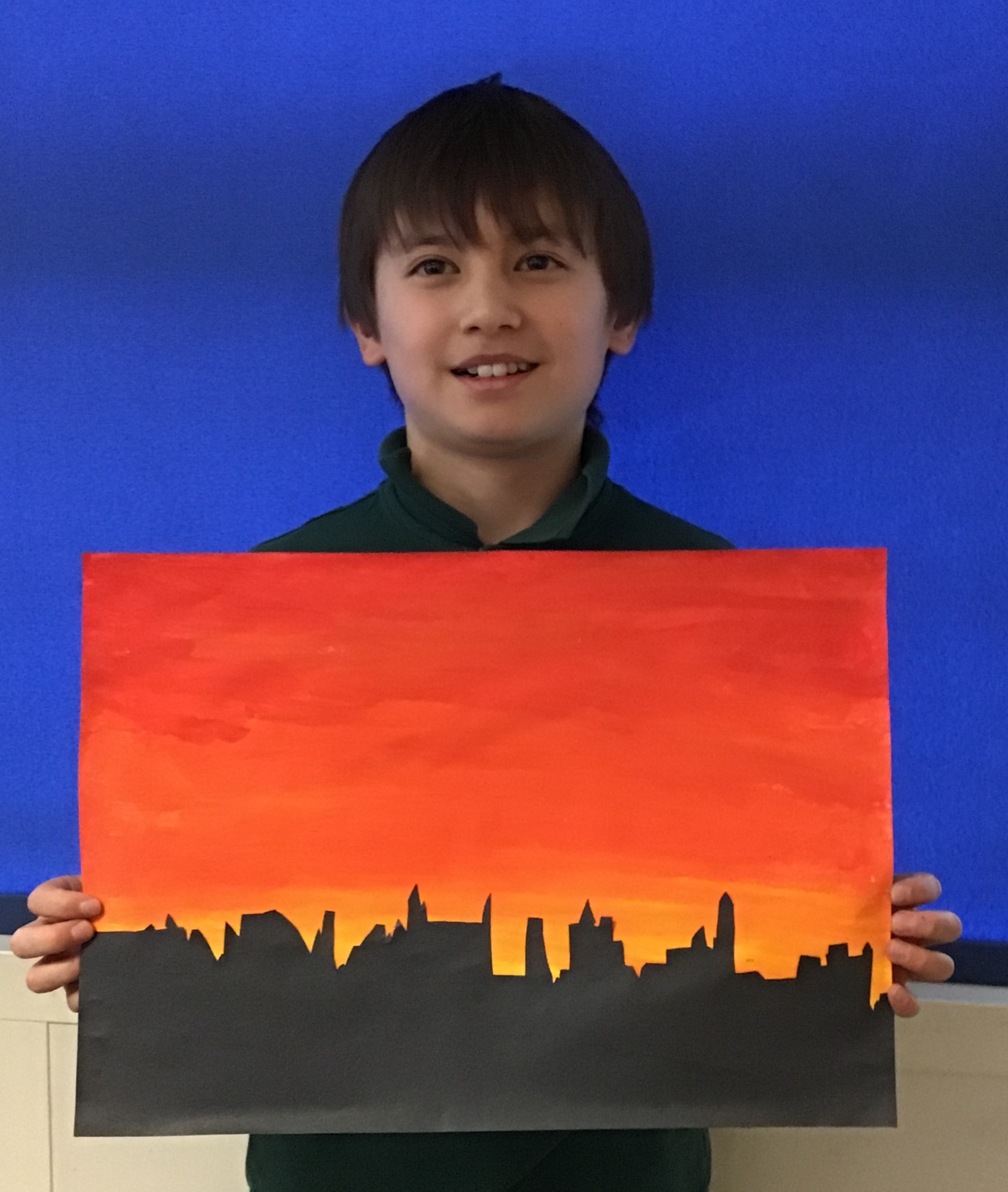
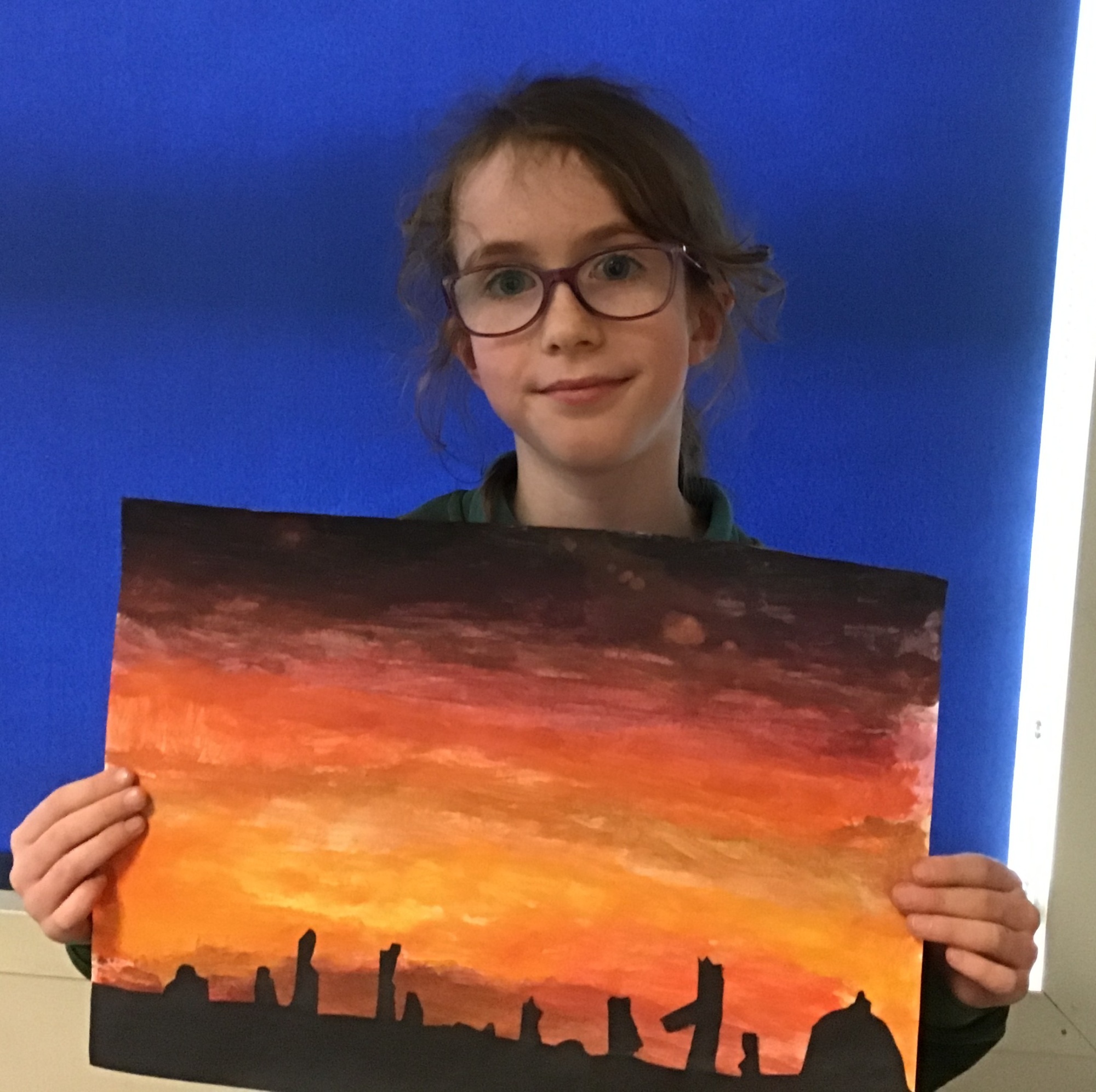
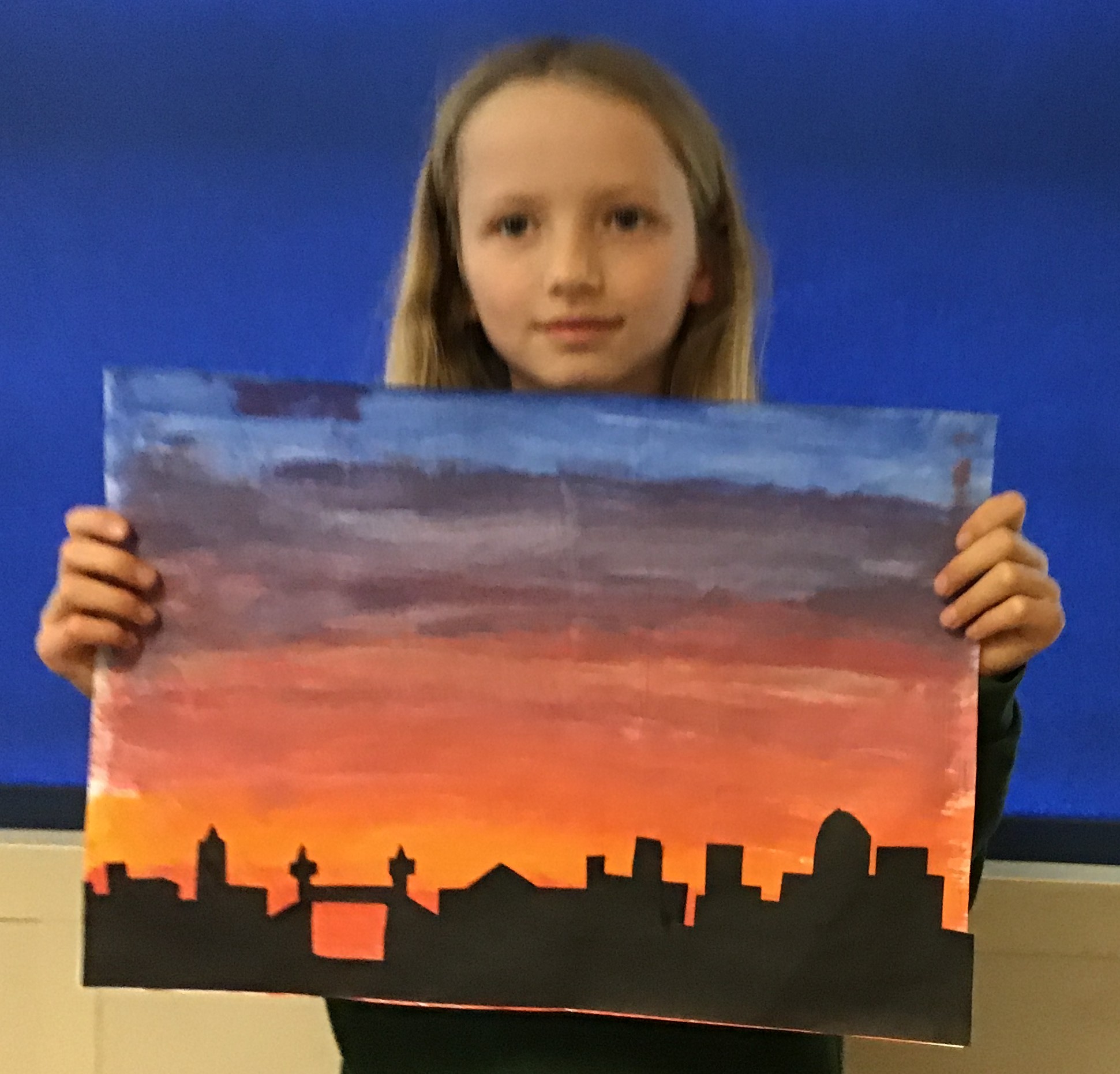
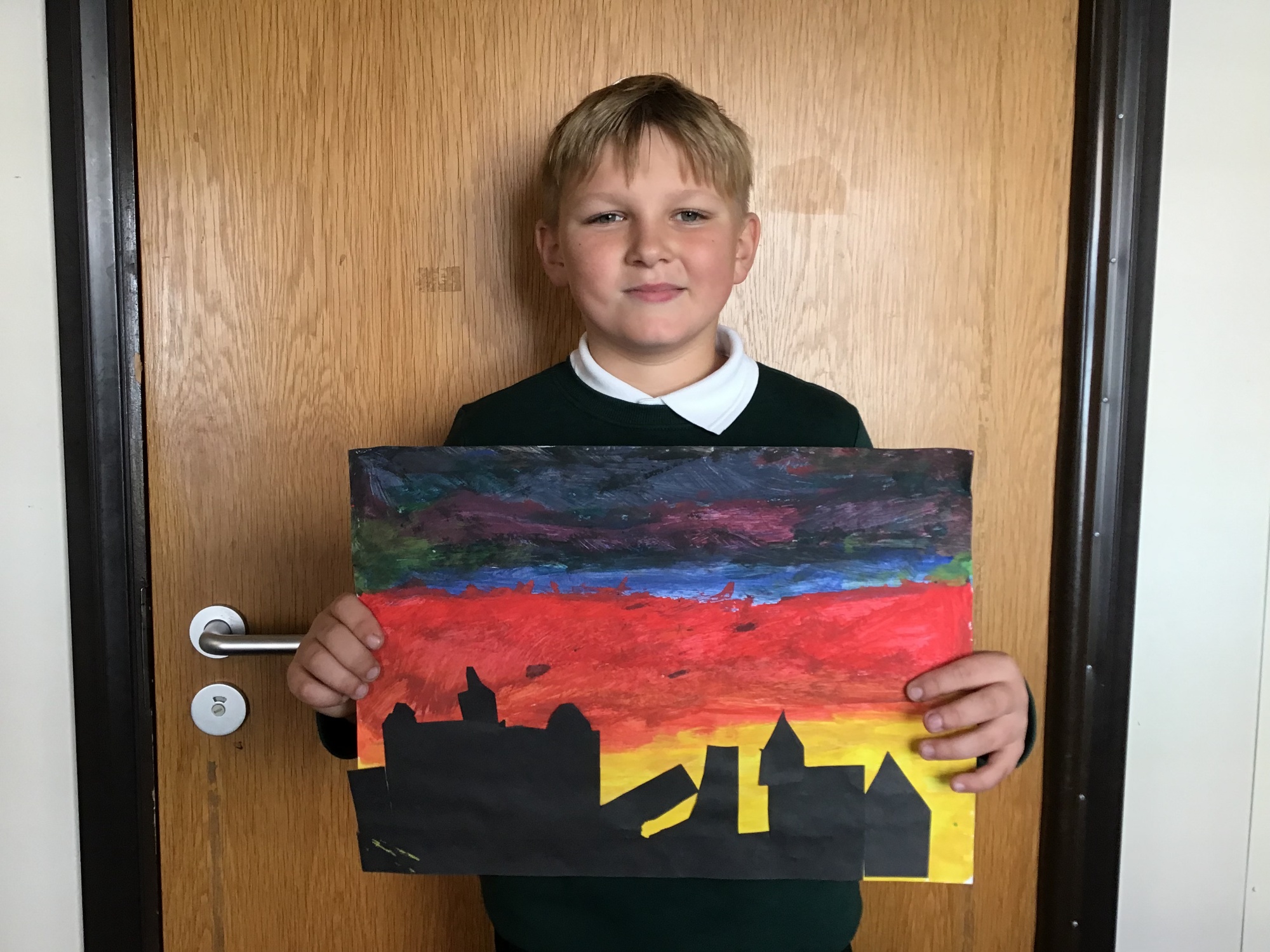
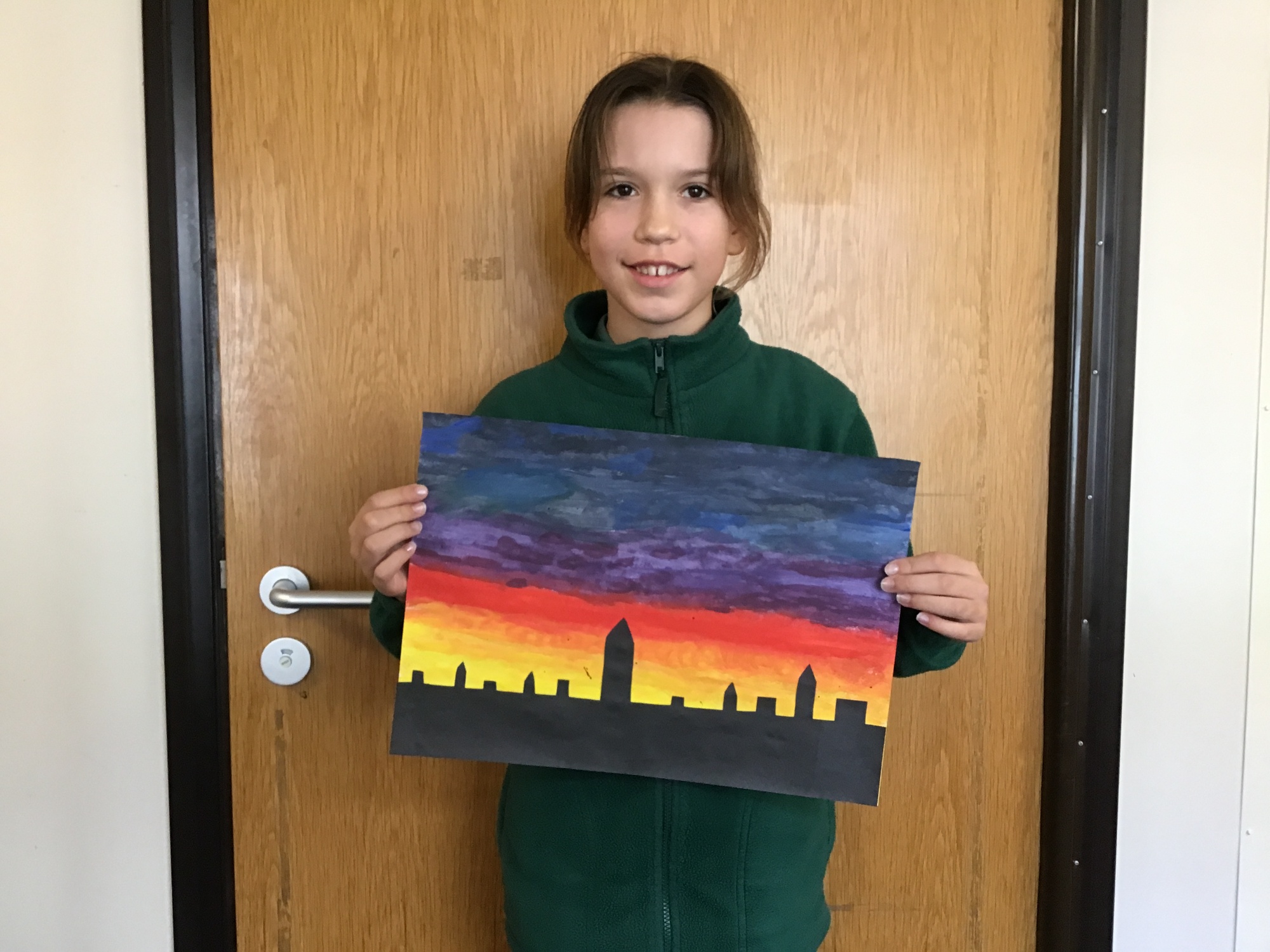
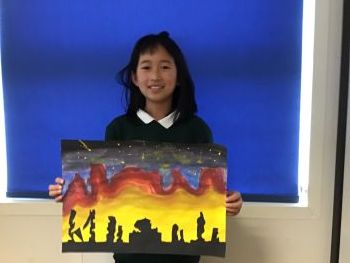
Year 6 used WW1&2 artist Paul Nash as inspiration for our silhouette watercolours. We used what we had learned about place in the UK that were bombed during the Blitz to create a large piece that showed life in that city either before, during or after the Blitz attacks.